




Sensory diet: what is it, and how does it support children with ADHD and autism?
When a child often seems restless, becomes overwhelmed quickly, or is constantly seeking movement, it is not necessarily just a matter of behavior. It can also be about how the child’s nervous system processes sensory impressions throughout the day.
A sensory diet is a professional term for a plan with targeted sensory activities that helps the child find more calmness, better body awareness, and a more appropriate level of energy. For many children with ADHD or autism, it can be an important supplement to educational strategies, structure, and other interventions in everyday life.
What is a sensory diet?
A sensory diet is not food. It is an individually adapted plan with sensory input distributed throughout the day. The idea is that the child receives precisely the types of stimuli that the body and brain need to better regulate attention, activity, and emotional reactions.
In occupational therapy, the concept of planned activities is used to support the nervous system. This can include deep pressure, movement, heavy tasks, tactile experiences, or quiet repetitions. The goal is not to "fill in more" randomly, but to provide the child with the right input at the right time.
When a sensory diet works, it is often seen that the child is more able to stay in an activity, switch between tasks, or fall back down after being overloaded. This is therefore about regulation, not entertainment.
Typical forms of sensory input can be:
- heavy pushes and pulls
- swing or cradle
- deep pressure
- tactile materials
- quiet repeated movements
How sensory diet affects the nervous system
Children with sensory processing difficulties can react very differently to the same environments. One child may become restless from noise and many people. On the other hand, another may seek more movement, more pressure, or stronger input in order to feel themselves properly at all.
Sensory diet is based on the idea that certain types of sensory stimulation can have a regulating effect. Particularly proprioceptive stimulation, i.e. input to muscles and joints, and vestibular stimulation, i.e. movement and balance, are often used in the work with children who have difficulty finding peace or focus.
Deep pressure and "heavy work" are experienced by many children as organizing. The body receives clearer signals about where it is, and this can make it easier to concentrate. In some children, rhythmic movement can reduce anxiety, while in others it seems to be activating. Therefore, the activities must be chosen with care.
It is precisely here that the individual assessment becomes crucial. The same gurney, pillow, or weight can be helpful for one child and too much for another.
Why children with ADHD may benefit from a sensory diet
Many children with ADHD not only have challenges with attention and impulsivity. They may also have a nervous system that seeks or reacts strongly to sensory input. This can manifest as constant movement, a need to touch things, difficulty sitting still, or quick frustration in noisy environments.
When the child gets short, planned sensory breaks during the day, it can reduce the need to seek stimulation in less appropriate ways. Instead of falling out of the lesson, disrupting it, or becoming overloaded, the child can receive more appropriate input beforehand.
It can be very simple actions. A child can enjoy carrying something, pushing a chair into place, sitting with weight during homework, or use your hands actively before a sedentary task begins. Small breaks can make a noticeable difference when used regularly and not only when the child has already run up the stairs.
In children with ADHD, it often comes down to timing. The sensory diet works best as a preventative support and not just as a quick fix.
How sensory diet can support children with autism
In children with autism, sensory processing often plays a large role in everyday life. Some are very sensitive to sound, touch, light, texture, or certain materials. Others seek intense movement, deep pressure, or repeated sensory experiences to create calm in the body.
When the environment feels unpredictable or too intense, the child may react with withdrawal, agitation, rejection, or meltdown. Here, a sensory diet focused on sensory input can create more predictability. The child is provided with familiar activities and tools that help the nervous system calm down or stay more stable.
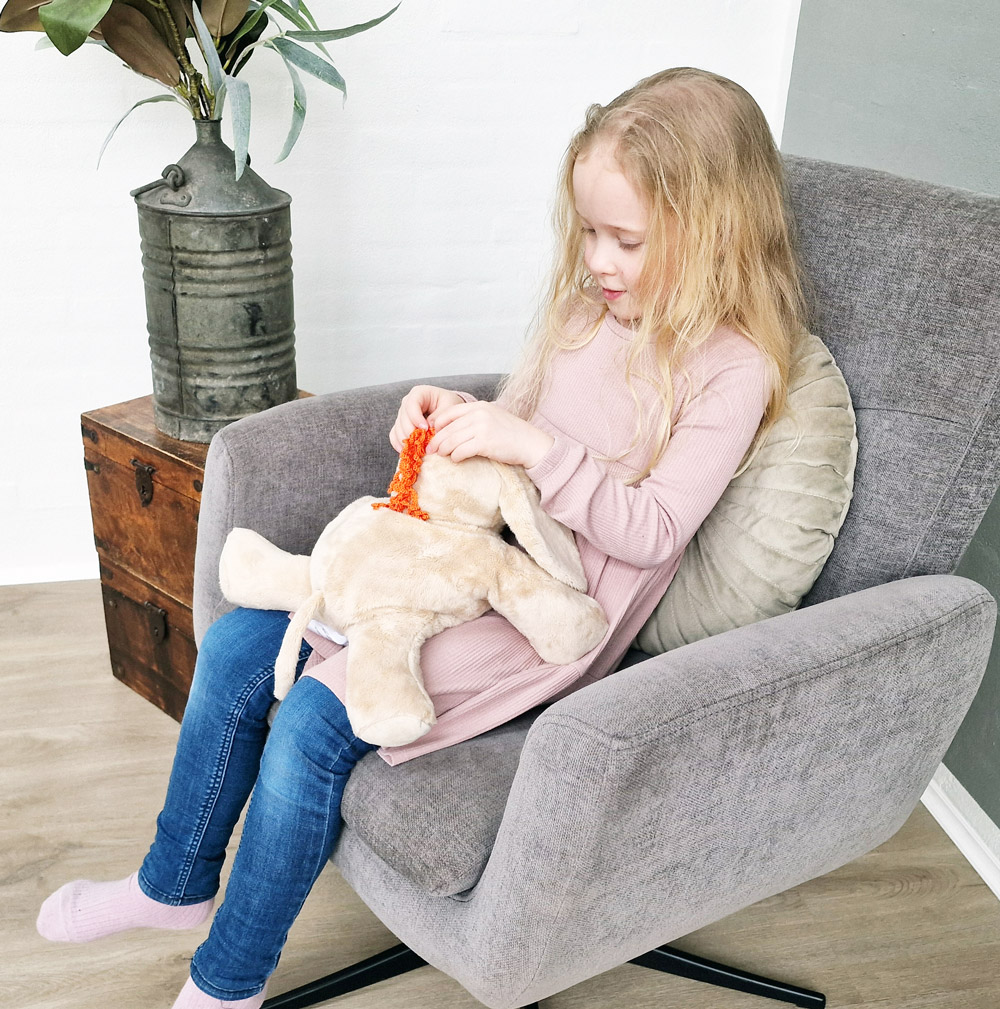
Deep pressure is an area that many professionals and families work with. Weight products, tactile assistive devices and calm sedation solutions are often used as part of a larger plan. When chosen correctly, they can give the child a clearer sense of their body and an experience of containment and security.
For some children, participating in social activities becomes easier when the body is more regulated. It is difficult to interact if all of the energy is spent on dealing with noise, touch, or internal discomfort.
Examples of sensory diet during a typical day
A sensory diet rarely works as a single activity. It makes the most sense when it is integrated into the rhythm of the day. Both at home, in daycare, and at school, small interventions can be distributed so that the child receives support before the difficult times.
The table here shows how a day might look like:
| Time | Typical challenge | Possible sensory input | Purpose |
|---|---|---|---|
| Morning | Anxiety about transition and getting dressed | Deep pressure, heavy bass, quiet rocking motion | Better start to the day |
| Before school or institution | High level of activity | Carrying a bag, pushing, pulling, short motor exercises | Assemble the body |
| First, sedentary tasks | Reduced focus | Hip pillow, sitting cushion, hand activity | Increase awareness |
| After the break or shift | Overstimulation | Quiet corner, pressure, subdued lighting | Fall down again |
| Later this afternoon | Accumulated sensory strain | Movement, sleeping, regular routines | Reduce anxiety |
| Evening and cuddling | Having a hard time letting go of the day | Weight, soft tactile materials, calm repetitions | Promote relaxation |
The important thing is not to copy a plan from others. The important thing is to look at the child's patterns. When does it become difficult? When does the child lose energy, and when does it become too much?
What activities are often included in a sensory diet?
There is no one true recipe. A good sensory diet is adapted to the child’s profile, age, daily routine, and preferences. Many activities are simple and can be integrated into regular routines.
A combination of movement, body work and touch is often used:
- Proprioceptive activities: push boxes, carry groceries, pull on elastic bands, help with practical tasks
- Vestibular activities: swing, tilt, roll, walk on a balance beam
- Tactile activities: model wax, rice bowl, fabric with different surfaces, sensory toys
- Quiet regulatory activities: deep pressure, weighted blankets, firm hugs if the child wants it
- Oral motor activities: chewing needs, pacifiers, crispy or chewy snacks, based on professional assessment
Some children benefit most from short breaks of 2 to 5 minutes. Others need longer periods of regulation. In some, movement provides energy. In others, the movement must be very rhythmic and measured to avoid creating more agitation.
What does individual adaptation mean in practice?
Two children with the same diagnosis may have completely different needs. One child seeks movement constantly. The other shuts down when faced with too many stimuli. Therefore, a sensory diet should always be based on observation, dialogue, and professional assessment.
One looks, among other things, at:
- When: Is the child being pressured, tired, or hyperactive?
- How: Does the child react to sound, touch, movement and change?
- What activities: provides clear peace, better focus or fewer conflicts?
- What should be avoided: input that increases agitation, resistance, or discomfort
An occupational therapist will often be able to help map out the child’s sensory profile and translate it into concrete suggestions. This makes the intervention more precise and more reassuring for both the child and the adults around the child.
Sensomotoric aids as part of a sensory diet
Assistive devices cannot stand alone, but they can be a valuable part of an overall plan. This applies especially to products that provide weight, deep pressure, or clear tactile feedback.
Danish manufacturers such as Oliz/Koko-Nora work with sensory motor aids developed for children, young people and adults with sensory challenges. The focus here is, among other things, on weight products, tactile solutions and robust materials that can be used both at home and in institutions. The products are developed in collaboration with physiotherapists and occupational therapists and are created for everyday use, where hygiene and durability also matter.
In practice, it may be weight bags, thigh pillows, shoulder pads, weight blankets or sideless solutions, Used by the child in limited situations. Some children benefit from weight under their desks, on the sofa, or when crossing over. Others use a tactile tool for their hands to better stay in an activity.
The decisive factor is always the child's response. A product is only relevant if it actually creates peace, security, or better participation.
Signs that the sensory diet is working well
You don't have to wait for major changes to assess whether something is working. The most important signs are often seen in the small changes in everyday life.
It could be that the child:
- Will return more quickly after the turmoil
- sit a little longer at the table
- Easier accepting change
- sleeps more peacefully
- seeking fewer conflicts
- Even asks for a break or a familiar tool
The opposite can also happen. If the child becomes more upset, rejecting or tired after an activity, it is a sign that the input needs to be changed. Sensory diet is not about pushing the child to tolerate more. It is about supporting regulation in a way that feels meaningful and safe.
Collaboration between home, school and professionals
A sensory diet works best when the adults around the child are pulling in the same direction. The home often sees some patterns, the school sees others, and professionals can help put it all together into a usable plan.
It doesn’t have to be complicated. Sometimes it’s enough to agree on a few fixed interventions at certain times and then adjust accordingly. A common understanding makes it easier to act calmly and consistently, even when the child is having a hard time.
It can be a great support for the child when the adults think: "What is the nervous system trying to tell us?" instead of only asking: "Why is the child behaving like that?"
This approach creates more space for care, precision, and solutions that last in everyday life.
[custom_faq_accordion]
Share this article
Other Articles

October 16, 2026
October 16, 2026

October 16, 2026
October 16, 2026
October 16, 2026