




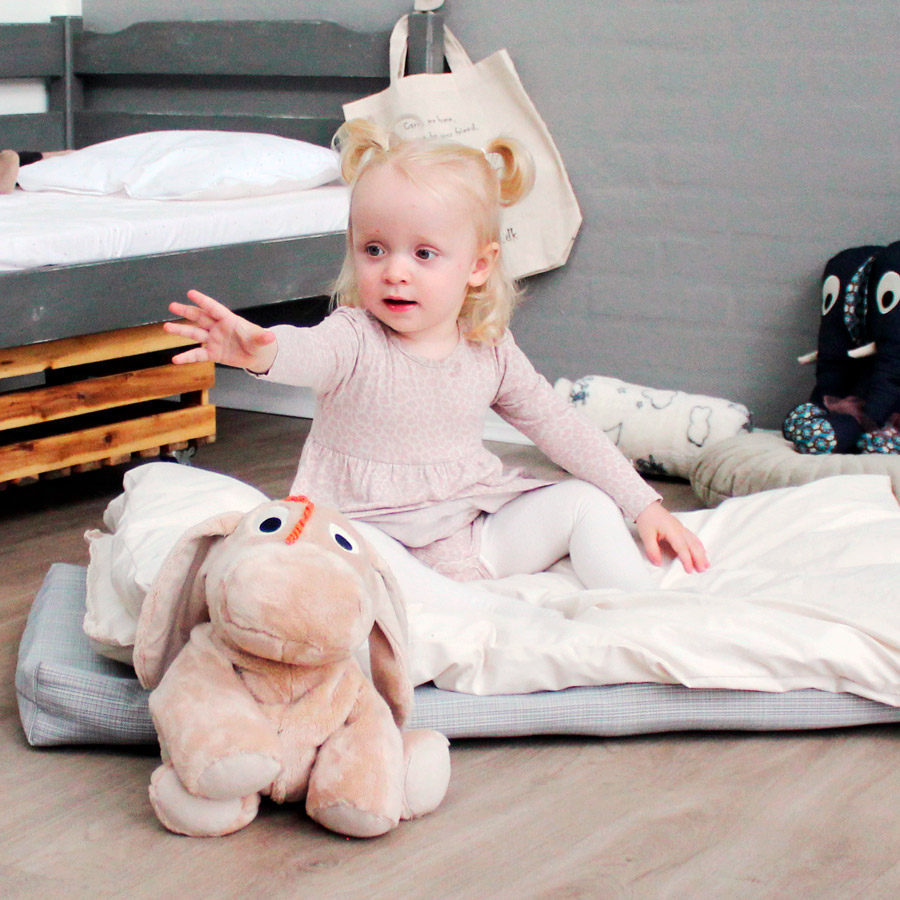
Sleep problems in children with sensory challenges: Evidence-based interventions
When a child struggles to fall asleep or wakes up many times during the night, it affects the whole family. For children with sensory challenges, the problem is rarely “just habits”. It may be a nervous system that has difficulty filtering sensory input, switching gears, and finding peace.
Sleep interventions work best when they take into account both behavior, environment, and sensory processing. Here you get an evidence-based overview, with an honest weighting of what is well-documented and what is typically used as support in practice.
When the senses keep the brain awake
Sensory challenges can look very different. Some children react strongly to light, sounds, seams in their clothes, or light touch (hypersensitivity). Others register body signals more weakly and seek more input through pressure, movement, or a “disturbed body” (hypersensitivity).
At bedtime, this often means that the child's arousal remains high. The brain is on guard, and the transition from activity to rest becomes difficult, even though the child is tired.
It is often seen as longer time to fall asleep, frequent awakenings, restless sleep and resistance to bedtime. Research indicates that the ability to filter sensory impressions is central to falling asleep and staying asleep, and that children with sensory overreactivity are more likely to have sleep problems, including in autism (pubmed).
Start with the most well-documented: behavioral sleep aid
Guidelines from, among others, the American Academy of Neurology (AAN) and British recommendations (NICE is mentioned in recent reviews) point to behavioral-based methods as the first choice for sleep problems in children with neuro- and developmental disorders (AAN guideline and review overview PMCIt’s not about “hard training”, but about predictability, appropriate expectations and support for self-regulation.
A randomized study (Sleeping Sound ASD) showed that a short, structured parent-based program could reduce sleep problems in school-aged children with autism (PMC).
It is often the small, stable adjustments that make the biggest difference over time:
- Fixed bedtime and fixed wake-up time
- Calm, repeated putting routine
- Screen-free time before bed
- Daylight and movement earlier in the day
- Same sleeping place, same framework
When behavioral interventions are ineffective, it often happens that the demands do not match the child’s sensory profile. In this case, it makes sense to adjust the environment and sensory input simultaneously, instead of increasing the “time spent on play.”.
The sleeping environment as a helper, not an opponent
The children's room can either dampen or trigger a sensory-sensitive nervous system. Recommendations regarding light, noise, and temperature are classic sleep hygiene, but they become especially important when the child has difficulty filtering out impressions. Environmental adaptations are often based on clinical experience and expert recommendations, and are discussed in professional reviews on sleep management (PMC).
It helps to think in terms of “sensory load” after 18: less noise, less light, fewer changes, fewer surprises.
Practical adjustments can be tested one at a time:
- Sound: white noise or quiet background sound, possibly noise reduction for disruptive sounds (PMC)
- Light: darkness and warm, subdued light in the bedtime routine
- Temperature: slightly cooler rooms, uniform night temperature
- Touch: nightwear and bedding without annoying marks, seams and stiffness
- Security: clear framework, same order, same ending every night
For some children, a small, steady sound is more soothing than total silence. For others, it is the opposite. The right choice can only be found by observing the child's response.
Deep touch and weight: what does the evidence say?
Deep pressure (constant, even pressure) is often used to help calm the body. Weight pillows is the most well-known tool, and the research shows a mixed picture.
A small single-case study with four autistic children found moderate improvements in sleep quality and longer sleep time when using weighted blankets (PMC). A systematic review from 2024 found overall only a small, not clearly significant effect on sleep, but a reduction in sleep difficulties measured by the ISI was observed through sensitivity analysis (pubmed).
At the same time, AAN emphasizes that there is no evidence to recommend weight-loss patches for routine use, although it is generally considered a safe measure when used correctly and the child can be kept free (AAN guideline).
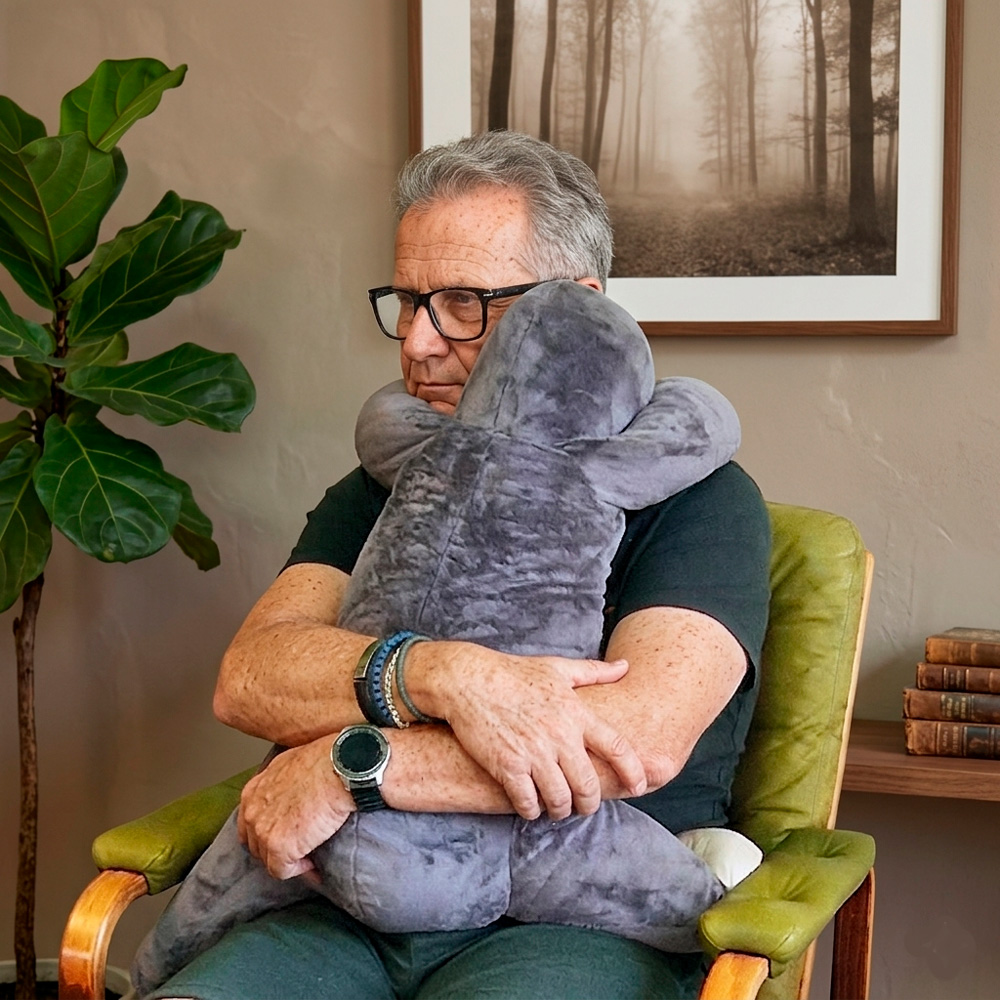
The practical take-away is that weight can provide clear comfort to some children, especially if they seek physical input, but that the effect cannot be expected in all cases. Weight pads, weight blankets, shoulder pads or weight bags is often used as part of a broader putting routine, not as the only solution.
Safety is always the first priority. Talk to an ergotherapist or physiotherapist if your child is very young, has motor challenges, breathing problems, or is unable to regulate their position on their own.
Touch, massage and tactile programs
When tactile hypersensitivity takes over, bedtime can become a battle with clothes, bedding, and “the wrong touch.” Here, gentle, predictable touch earlier in the routine can help the body shift gears.
A small pilot study with parental education in a targeted touch program (also known as Wilbarger-inspired brushing in some environments) reported improved sleep in most participating children measured via parent reports (PMC). The level of evidence is low, but many clinicians use touch as a support for body positioning when adapting it to the child's tolerance threshold.
It is important to avoid allowing touch becoming another sensory load. Start slowly, briefly, and with the child’s acceptance. Some children benefit more from pressure through a pillow or a firm hug than from strokes or “irritating” contact.
Movement before bedtime: vestibular input with consideration
The sense of movement (vestibular) can both calm and activate. Some children settle down through rhythmic, predictable movement, while others become more alert.
There are small studies and clinical reports showing that activities involving movement, such as swimming, have been associated with better sleep that same night in some autistic children (PMC). There is not strong evidence, but it points to an important principle: the right type of activity at the right time can lower arousal.
Timing matters a lot. Strong play just before the shot can keep the body moving. A short, calm movement sequence earlier in the evening can work better, followed by calming down, a bath, story time, and a reassuring ending.
Overview: what can one try, and what is the documentation strength?
It can be a relief to get a comprehensive overview of the possibilities. The table here can be used as a dialogue tool with professionals and as a framework for testing at home.
| Actions | What it is aimed at | Documentation (briefly) | Typical use in practice |
|---|---|---|---|
| Behavioral sleep strategies | Habits, sleeping patterns, expectations | Good guideline support and RCT data in ASD programs (PMC, AAN) | First choice, often with small adjustments to the family |
| Environmental adaptation (light, sound, temperature) | Sensory load in the sleeping environment | Most expert recommendations and clinical practice (PMC) | Low risk, high relevance due to sensory sensitivity |
| Weight pillow/weight (deep depression) | Proprioception, body sense | Small studies and recent reviews with limited overall effect (PMC, pubmed); not recommended as routine by AAN (AAN) | Can be a supplement for children who seek pressure |
| Touch program/massage | Tactile regulation, relaxation | Low evidence, small pilot data (PMC) | Often used in ergo/family guidance with careful adaptation |
| Melatonin (prescribed by a doctor) | Circadian rhythm and sleep onset | Good documentation in neurodevelopmental groups (PMC, AAN) | Relevant when behavior and the environment are not enough on their own |
When sleep still does not come: melatonin and professional assessment
When a child has persistent sleep problems despite routines and a good environmental framework, melatonin is often mentioned. Studies show that melatonin can increase total sleep time and shorten the time it takes to fall asleep in children with, among other things, autism and ADHD (PMC). AAN also recommends melatonin when behavioral strategies are not enough (PMC).
Melatonin should be seen as a supplement, not a substitute for structure, safety, and sensory considerations. It should always be done in collaboration with a doctor, with a focus on proper indication, dosage, timing, and follow-up, especially if the child is also receiving other medication.
A professional assessment is also relevant if the sleep difficulties are linked to anxiety, pain, reflux, eczema, leg cramps, or breathing problems. When the body is not feeling well, no bedtime routine can “win” every night.
Test one measure at a time and measure something that can be seen.
When families try many things at the same time, it becomes unclear what actually helps. A simple sleep diary for 10 to 14 days can be enough to see patterns: time to fall asleep, number of awakenings, time awake at night, and morning mood.
After a week of the same measures, one can often answer: Is the sleep time shorter? Are the awakenings fewer? Is the child more rested, even though the night is not perfect?
A pragmatic goal could also be “more peace of mind when sleeping”, not just the number of hours of sleep.
Cooperation around the child: home, institution and therapists
Many children get the best effect when the same principles are repeated in everyday life. The institution can support with daylight, appropriate activity and breaks, so that the child does not face a nap time with a nervous system in overdrive.
Ergonomics and physiotherapists can contribute with assessments of sensory profiles, suggestions for sensory regulation, and concrete adjustments that suit the child's tolerances. For some families, choosing robust, Cleaning-friendly sensory products, developed with a focus on safety and everyday use, often in close dialogue with clinical practice assistive devices should work both at home and in institutions.
When to seek help quickly
If the child snores loudly, has breathing pauses, becomes very breathless at night, has nighttime attacks, or if the lack of sleep leads to a significant decline in well-being, it is a good idea to contact your own doctor or a specialist in children's health.
The same applies if the sleep problems become so debilitating that the family can't handle it. There is help available, and a plan that takes the senses seriously can make the nights more predictable and the days easier to be in.
[custom_faq_accordion]
Share this article
Other Articles

October 16, 2026
October 16, 2026
October 16, 2026
October 16, 2026
October 16, 2026