



Weight supports in special education: Use, benefits and maintenance
When a child is overwhelmed by noise, demands, and changes, the body can feel like a motor that cannot be turned off. In these situations, many look for something concrete that can provide peace without imposing more demands.
One weight bag is precisely one of the aids that is often perceived as “easy to accept”, because it resembles something familiar and reassuring, but at the same time provides targeted, soothing sensory input.
What is a weighted blanket, and why can it seem soothing?
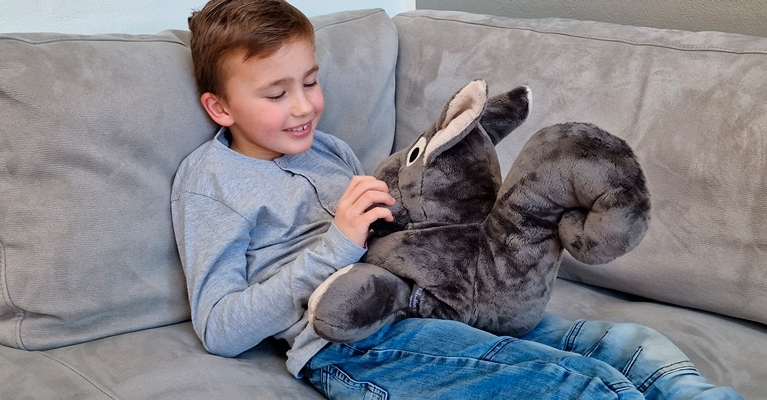
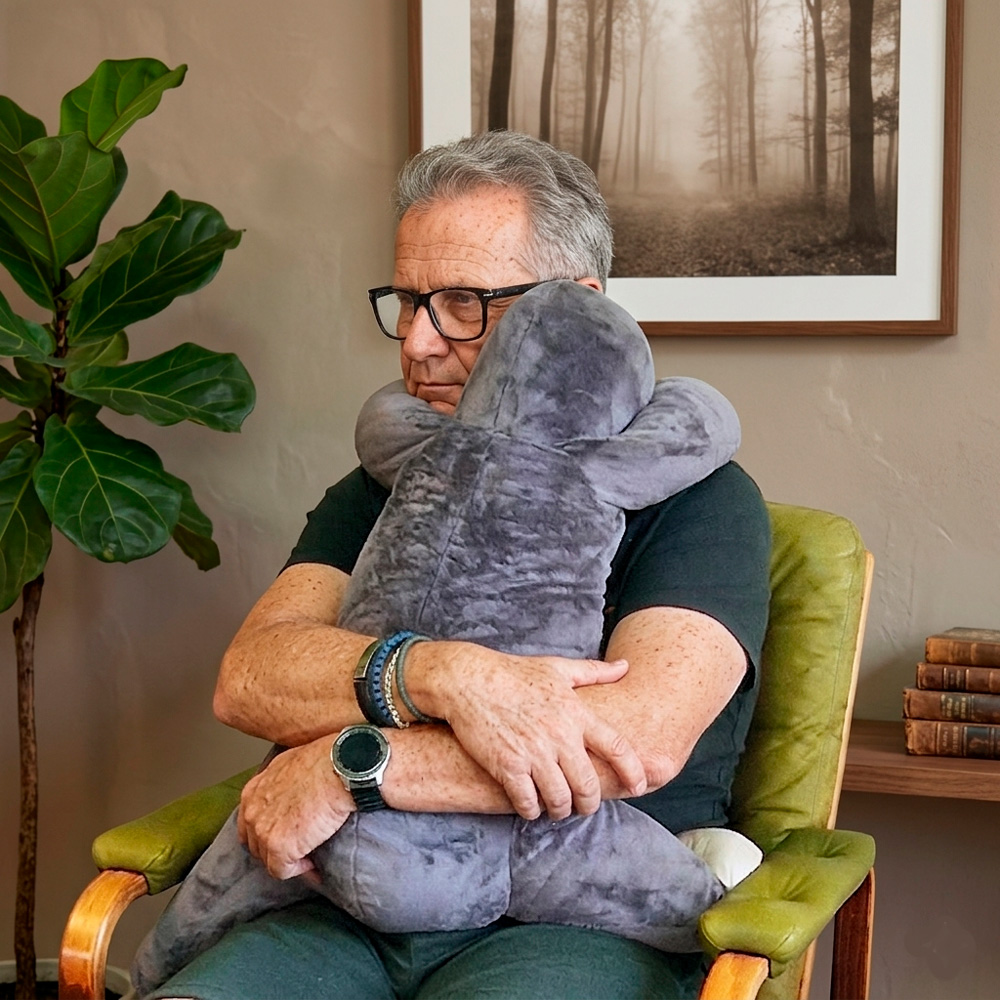
A weighted teddy bear is a weighted stuffed animal where the weight is distributed as an even pressure in the crook of the arm, on the stomach, over the chest (under supervision) or close to the body in a hug. The effect is typically associated with deep pressure, also known as deep pressure, which is a form of proprioceptive stimulation.
Deep breathing can help the nervous system to gear up. Many describe it as a bodily “assembly,” where breathing becomes calmer and it becomes easier to endure being in a space, waiting for your turn, or completing a task.
It’s not magic, and it doesn’t work the same for everyone, but for some children and young people, the weight can be a shortcut to regulation when words and agreements are not enough.
How do weighted stools fit into special education?
In special educational environments, weighted blankets are often used as a low-tech tool in a sensory approach. They can be included in a quiet corner, in a break box, in a Snoezelen/sensory room or as part of an agreed “regulatory routine” during the school day.
Weight bars also have an advantage compared to larger ones. heavy productsThey can be dosed more precisely. One can move it from the injection site to the abdomen, remove it quickly again, and the child can often control the contact themselves, which is important for the experience of control.
In some classrooms, it makes sense for the weight-bearing bar to have a fixed “home” so that it does not become a bargaining chip in stressful situations. In other contexts, it works best as a personal aid attached to one student.
Who can benefit from a weight bench?
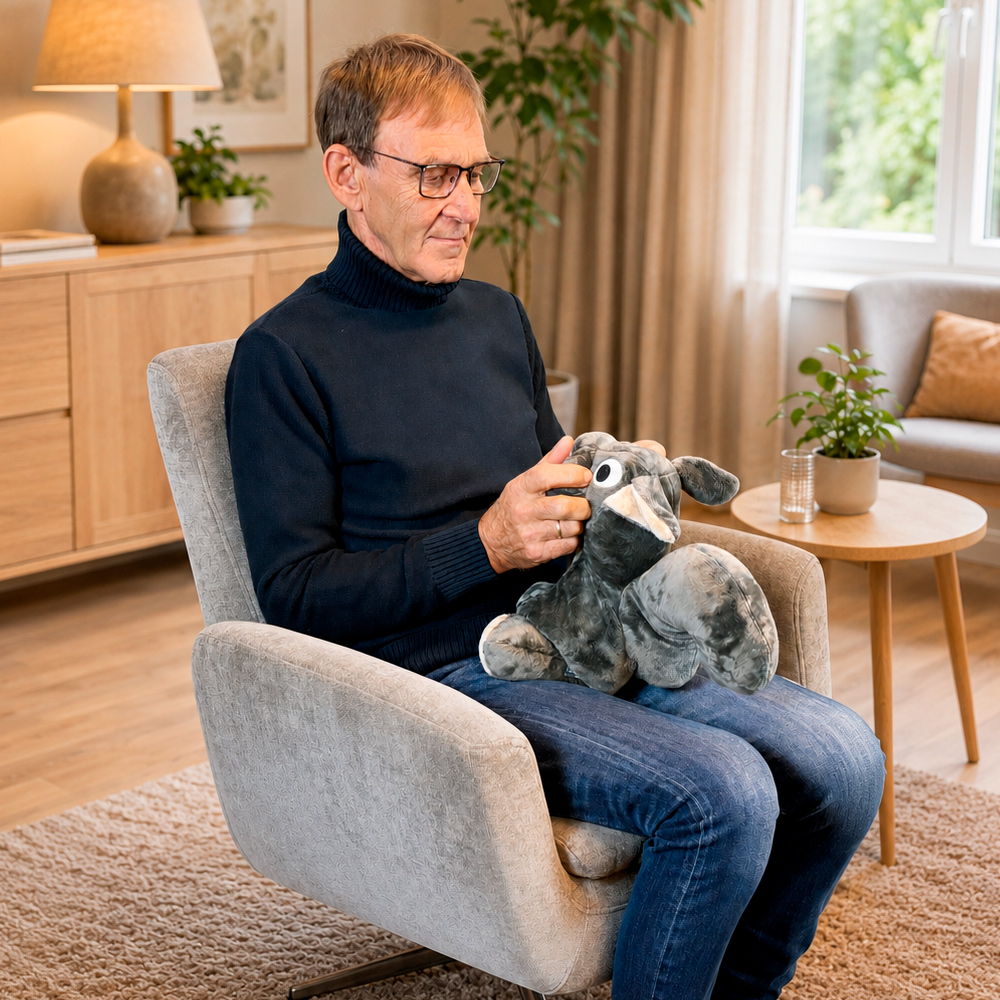
The target group is broad, but the needs are often the same: challenges with sensory processing, arousal, and self-regulation. In practice, weighted blankets are used with children from around 1 year of age and up through youth education, and also in adults and the elderly, where tactile comfort can make a big difference.
Weight scales are often used in:
- autism, where sensory impressions and unpredictability can cause stress in the body
- ADHD, where restlessness, impulsivity and difficulty in “calming down” can be very pronounced
- anxiety and insomnia, where the body is in alarm mode
- dementia, where anxiety and uncertainty can be reduced by a familiar, sensory object
The most important thing is not the diagnosis, but the specific function: Does it help the person find peace, focus, or security in situations where it would otherwise be difficult?
How to choose weight, size and tactile details
Choosing weighted toys involves both weight, shape, and materials. Many professional recommendations are based on the fact that weighted products should be safe to use in everyday life and that the person should be able to finish using them themselves. A common rule of thumb is to keep the weight around a maximum of 10 percent of the body weight, with professional assessment of deviations, but there may be good reasons to be lower, especially in young children or in cases of respiratory problems.
Think also about how the teddy bear shape invites to use: Some have long arms that can be placed over the shoulders and chest, others are more compact for the hips and abdomen.
When you have to choose, it can help to work systematically:
- Purposes in everyday life: Rest after a shift, support during desk work, reassurance when handing over, or something completely different.
- Location on the body: The shoulders and the chest often give a “silent” weight, while the back and the arms can feel more intense and require closer supervision.
- Material and tactility: Some need a soft, uniform surface, others seek structure, ribs or small tactile areas.
- Security and independence: The person must be able to move or push the teddy bear/weight away without help.
A good choice is often the one that is used voluntarily again and again, without it becoming a battleground.
Use in practice: small routines with great effect
Weight blankets work best when they are not only used when it gets hot. If they are paired with predictable breaks, they become a familiar tool that the body already associates with calmness.
One simple way is to create a mini-protocol that both the adult and the child can recognize: where, for how long, and what happens afterwards. In many places, using a time glass or a fixed song can provide peace of mind so that the ending doesn't feel abrupt.
After a brief agreement on the framework, you can try some typical applications in teaching and at home:
- in the act of high-reading
- in the corner of the room for 5 to 10 minutes after the break
- at the time of handing over or switching between activities
- as “waiting help” when there is traffic, noise or many people
Small adjustments mean a lot. Some settle down with ease, others become irritated if it gets too hot or too firm.
Advantages that are often seen, and what not to promise
When weighted blankets help, the effect is often visible in behavior: fewer interruptions, less motor restlessness, more endurance at the table, or a faster return after an emotional outburst. For some, it also makes the transition to sleep easier, especially when the weighted blanket and evening routine are connected.
At the same time, it is important to be honest: Research on weighted products points to positive experiences, especially regarding perceived comfort and anxiety reduction, while the effect on weight loss is unclear. sleep Can be more mixed, depending on the measurement method and target group. Many children and parents prefer weighted products, even when objective sleep measurements do not change significantly.
It makes sense to formulate the goals in a concrete and measurable way: “can sit for 10 minutes on the task” or “can fall asleep after a break without conflict” instead of “gets along well” or “always sleeps better”.
Materials, hygiene and maintenance in a busy everyday life
In institutions and care environments, weighted blankets are used close to the body, often by several people over time. Therefore, cleanliness-friendly design Not a luxury, but a prerequisite. Danish-produced sensory products are often developed in collaboration with physiotherapists and occupational therapists precisely to be suitable for daily use and frequent cleaning, with a focus on safe materials and robust stitching.
Weight washers can be filled with plastic granules, polyethylene balls, or other weight materials. The choice affects both sound, weight distribution, and washing capabilities. In any case, one should follow the manufacturer's washing instructions, as incorrect washing can cause lumps, damaged seams, or reduced functionality.
Here is an overview that can be used as a checklist:
| Part of the gravity well | Typical choices | What it means in practice | Maintenance in practice |
|---|---|---|---|
| Outer fabric/cover | Cotton, bamboo, durable textiles, often tested for harmful substances | Comfort against the skin and less irritation | Wash after the label; in many environments, the option of 60 °C is desired in case of infection requirements |
| Fill and weight | Plastic granules, polyethylene balls, glass beads (depending on product) | Weight sensation, noise level and weight distribution | Ensure that the filling remains evenly distributed; avoid washing methods that could damage the filling chambers |
| Seams and chambers | More chambers and reinforced seams | Even distribution and fewer “heavy lumps” | Check the connections regularly, especially when using the product daily, and remove the product from operation in case of leakage. |
| Surface details | Tactile fields, different textures, embroidery | Can provide extra comfort or increase acceptance | Consider whether the details collect dirt and whether they are suitable for disinfection/washing. |
One crack is enough for small balls to become a safety risk. Therefore, a weight balance should always be checked if it has been subjected to heavy loads, or if you hear the “crack” in a new way.
Security and ethical frameworks: peace must never become an obsession
Weight restraints must never be used as a shortcut to keep someone in control of their own actions. This applies both in schools, day care centers, and nursing homes. A key principle is that the person must be able to remove the weight themselves, and that the use should feel safe.
In practice, it makes sense to have a simple, written framework for use, especially when several adults share responsibility. It can be part of the student's action plan or an internal procedure in the institution.
A good framework can accommodate:
- Who may offer the weight hammer: so it becomes professionally uniform, and the child does not have to meet changing requirements.
- When is it used: agreed upon times and situations so that it prevents fires from starting instead of just putting them out.
- How is follow-up done: brief note about the effect, duration and any signs of discomfort.
If there is Epilepsy, In cases of respiratory problems, motor limitations or very low muscle tone, the choice and use should always be discussed with a relevant healthcare professional.
When the gravity bump doesn't help, or when it should be used differently
Some react neutrally. Others become more upset because the weight feels “too much,” or because the teddy bear format provokes resistance. That doesn’t mean the idea of deep pressure is wrong, but that the dosage and form are not appropriate.
Try adjusting one thing at a time: shorter time, lower weight, different location, or use only during completely calm moments for a period of time. If there is still no effect, it may be more relevant to use other sensory approaches such as movement, chewing tools, tactile dimmers, a seat support, or a more clear structure around breaks and requirements.
The most important thing is that the aid is not a symbol of the person “having to fall down”. It should be an offer that provides the experience of support and the opportunity to restore the body’s balance on their own.
[custom_faq_accordion]
Share this article
Other Articles

October 16, 2026
October 16, 2026
October 16, 2026
October 16, 2026
October 16, 2026