




How to choose the right assistive devices for institutions
When an institution needs to purchase sensory aids, it is tempting to start with the unit price. That makes sense when the budget is tight, but the unit price only tells a small part of the story. A weighted blanket, a weight vest, one shoulder cushion, one sense of humor or one armchair It is often used many times every day by multiple people in environments with high demands on cleanliness, safety and operation.
Therefore, the purchase quickly becomes more than just a matter of price. It also depends on how long the product lasts, how easy it is to maintain, and whether the supplier can help if needs change. For daycare centers, schools, special programs, and nursing homes, a wrong choice can have both financial and everyday consequences for the user.
When assistive devices are part of daily operations
Assistive devices are not decorative items or occasional activities. They often form part of regular routines, transitional situations, breaks, barriers, and support for regulation throughout the day.
Sensory integration plays a crucial role in how sensory aids are incorporated into daily life in institutions. By understanding and implementing sensory integration, institutions can ensure that sensory aids are used effectively to support children and adults’ sensory needs. This can improve well-being, concentration, and overall development, ultimately leading to a more harmonious and productive institutional environment.
Precisely for this reason they should be considered operational critical devices, not as accessories.
A weighted vest that loses its shape, a cover that does not withstand frequent washing, or a chair with parts that wear out quickly can create interrupted workflows and extra work for staff. When the solution works stably, it becomes easier to adhere to the pedagogical or care-related frameworks, as they create safe environments for both users and staff.
Typical burdens in institutional care are often:
- many users on the same product
- Frequent cleaning
- lifting, moving and storage
- intensive use in short and long intervals
- the need for rapid replacement between citizens or children
This means that purchasing should be seen in the context of both usage patterns and personnel practices. The product that works well in a private home is not always the right choice for an institution.
When an institution considers purchasing sensory assistive devices, it is important to take sensory integration into account and to consider how these resources will fit into the institution’s existing routines and practices. Institutions should consider the daily needs for sensory assistive devices and analyze how they will be used in relation to their current educational or therapeutic goals. This requires a comprehensive assessment of what makes the most sense for staff and the users who will benefit from the assistive devices.
Durability is more than just wear resistance
Durability is often reduced to the question of how strong the material is. In practice, the picture is broader. Material selection, stitching, closures, padding, assembly, the possibility of washing and access to repairing or replacing parts all have an impact on lifespan.
This also applies to the product's construction. Aids with a simple and robust design usually hold up better in busy environments. Fewer vulnerable parts reduce the risk of errors, and cleanable surfaces make it easier to keep the products in good condition without compromising hygiene.
With furniture and chairs, it makes sense to look for tests and standards for strength and safety, such as EN standards and in some categories BIFMA-related testing principles. In sensory products, CE marking, Documentation of materials and clear washing instructions are also important landmarks. If the materials have been tested for harmful substances, this is an added reassurance, especially when the products are used close to the body.
| Evaluation point | What should the institution ask about? | Why it matters |
|---|---|---|
| Materials | Can surfaces and textiles withstand daily use and cleaning? | Less wear and fewer replacements |
| Construction | Can closures, covers or parts be replaced? | Better lifespan and lower costs |
| Hygiene | Can the product be washed, wiped down, or drained as needed? | Safe use across multiple citizens |
| Documentation | Is there CE marking, testing or other product documentation available? | Provides a more secure basis for decision-making |
| Practical use | Is the product easy to take off and put on, move around and store? | Saves time in a busy everyday life |
A good question when buying is therefore not only: "How long will it last?" But also: "How long will it last under our conditions?"
Total economy over lowest price
Two products can look identical on paper and yet have very different economics over three or five years. This is where total economics, often called TCO, becomes relevant. The idea is simple: One looks at all significant costs over the product’s lifetime, not just on the invoice at purchase.
With assistive technology, the hidden costs can be surprisingly high. If a product needs to be replaced early, if cleaning is cumbersome, if staff have to spend unnecessary time handling it, or if it cannot be used flexibly across users, the low purchase price quickly becomes less attractive.
When institutions calculate the total economy, it is often these items that provide the clearest picture:
- Purchases: price, shipping, any initial setup and customization
- Operation: washing, cleaning agents, storage and daily handling
- Maintenance: spare parts, repairs and replacement of worn parts
- Staff time: Training, adjustment and additional time spent on impractical solutions
- Replacement: how quickly the product needs to be replaced completely or partially
Some institutions choose to work with a simple lifetime calculation. If a product costs more when purchased but lasts twice as long and is also faster to clean, it may be the cheapest solution overall. This is especially true in environments with high usage frequency.
Sustainability is also linked to the overall economy. Products with longer lifespans and the possibility of continued use after washing or updating produce less waste and require less replacement. This is good for the budget and often also provides better peace of mind when planning.
The development of products and services plays a crucial role in ensuring that institutions get the most out of their investments. Through continuous development, manufacturers can offer updated solutions that better match the changing needs of different environments. This can include everything from design improvements to new features that enhance the usability and durability of the products.
Service agreements and support can be just as important as the product itself
A good product rarely stands alone. The help that comes before, during, and after the purchase makes it more important than many expect. Some institutions need a simple warranty and quick access to answers. Others need regular service visits, spare parts, or a quick response time if something goes wrong.
Not all assistive devices require a formal service agreement. But it is wise to clarify what the institution actually needs. chairs, mobile sensory rooms And for other products with more complex construction, scheduled servicing can be a clear advantage. For textile-based products, support regarding washing, use, replacement, and the correct sizing can be at least just as valuable.
Before making a purchase, it is a good idea to get it clarified:
- Warranty: What does it cover and for how long?
- Spare parts: Can wear parts or covers be ordered separately?
- Response time: How quickly does the supplier respond to questions or errors?
- Demo and testing: Can the product be demonstrated in practice before a major purchase?
- Advice: Is there professional advice on choosing between different user groups?
For institutions, predictability can be almost as important as price. If a supplier is easy to reach, has clear processes, and can help with testing, it reduces the risk of errors. It also provides greater peace of mind for employees, who need the solution to work in their daily lives.
High hygiene requirements place special demands on the choice
In many institutions, cleaning is not just a practical detail. It is a prerequisite for the products to be used properly and flexibly. Here, washability, removable covers, materials that can be wiped down, and solutions that can be cleaned without special equipment are very important.
It is also here that quality differences quickly become apparent. Some products may appear robust at first glance, but lose their shape or function after repeated washes. Others are designed specifically for daily use in environments where hygiene must be maintained without requiring complex maintenance.
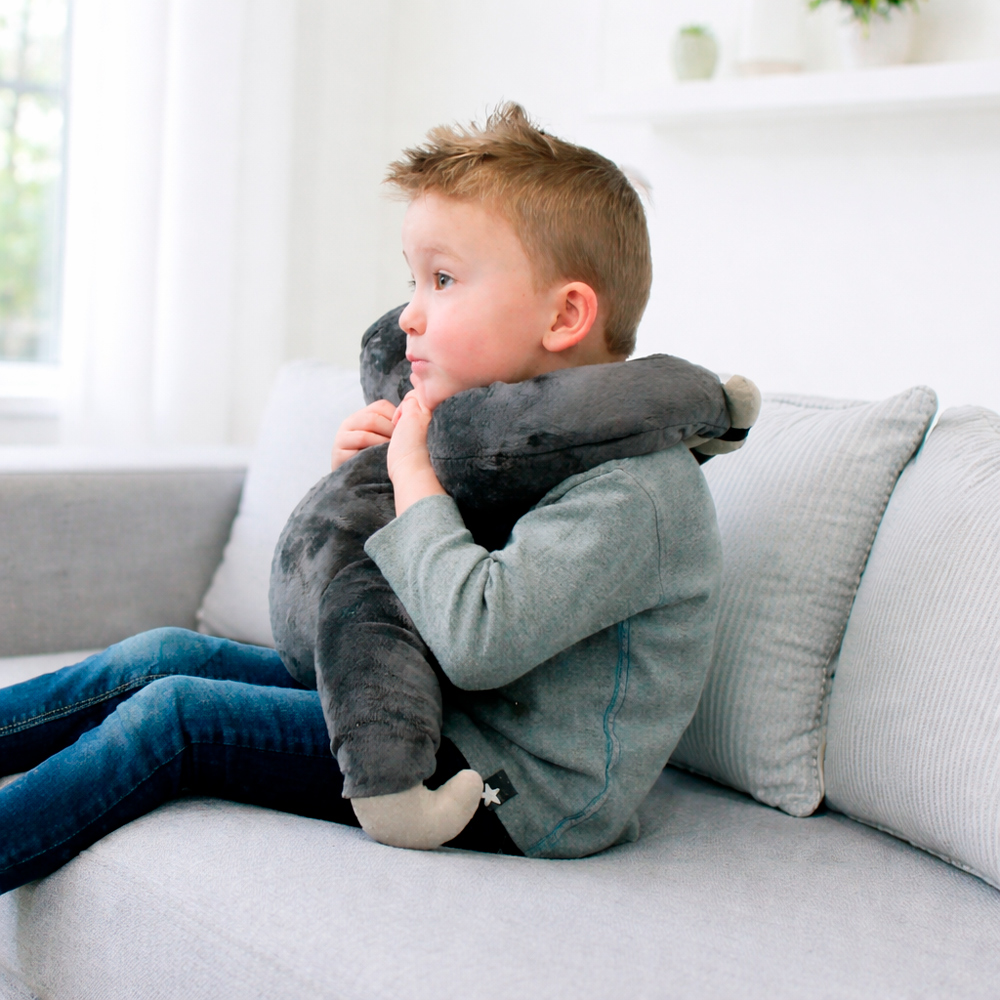
At Danish producers such as Oliz/Koko-Nora occupies a large part of this area. The products are developed in collaboration with physiotherapists and occupational therapists and are designed for use where cleaning and wear are a constant part of everyday life. Materials tested for harmful substances, robust construction and solutions with weight and tactile elements provide a better starting point for institutions that need to purchase products with both safety and operational considerations in mind.
In several product areas, it is also advantageous when products can be emptied, washed, and prepared again, rather than having to be discarded. This is a practical detail that has great significance over time.
Senses, including the sense of touch, also play an important role when choosing products for institutions. Products that stimulate the senses can help improve the quality of life for users, whether it involves soothing elements or activating activities. Suppliers should consider how products appeal to the senses, as this can lead to better user engagement and optimal utility in daily activities.
When the target group ranges from small children to older people with dementia
Institutions rarely purchase products for a single homogeneous user group; sensory stimulation often needs to be adapted individually. Within the same municipality or organization, the needs can range from preschool children with sensory challenges to school students with ADHD or autism, and elderly citizens with dementia, anxiety, or restlessness. This places demands on the supplier and the purchasing process itself.
A good product for children is not necessarily suitable for adults. Weight distribution, size, texture, cleaning requirements and ergonomics must suit the specific usage situation. The same applies to furniture and sense perception solutions, Where safety, load and maintenance must be assessed based on the target group.
Therefore, it makes sense to ask for advice, a demo, or testing, especially when it comes to larger purchases. Some suppliers offer this as part of their service, which can help qualify the choice before ordering.
A simple model for the next purchase
When purchasing sensory assistive devices needs to be done more systematically, the process does not have to be cumbersome. A short and fixed model can be enough to significantly improve the quality of the decision.
A practical approach might look like this:
- Describe the usage situation as specifically as possible: Who is going to use the product, how often, and under what hygiene requirements?
- Set requirements for documentation: materials, washability, CE marking, testing, and expected lifespan.
- Rain on the total economy: purchases, maintenance, staff time and likely replacement frequency.
- Clear up service and support: warranty, demo, spare parts and response time for questions.
Small adjustments in the purchasing method can make a big difference. When the requirements are clear from the start, it becomes easier to choose products that provide peace of mind and stable operation for many years.
[custom_faq_accordion]
Share this article
Other Articles

October 16, 2026

October 16, 2026

October 16, 2026
October 16, 2026

October 16, 2026