



Glass padding in weight vests: Benefits for hygiene, durability and sensory perception
The choice of padding in a weight vest may sound like a minor technical detail. In practice, it has a major impact on how the vest feels against the body, how easy it is to keep clean, and how well it withstands many hours of daily use.
When a weight vest is used by children, young, adults or older people with sensory challenges, the choice of materials quickly becomes important. The vest should often be able to be used again and again, withstand cleaning, and retain its function over time. Here, glass filling stands out as a solution that makes sense both in the home and in the workplace. institutions.
Why the padding material in a weight vest matters
A weighted vest is not just about weight. It is also about fit, freedom of movement and the way pressure is distributed over the body. If the padding clumps together, moves too much or traps moisture, the experience can become less stable and less comfortable.
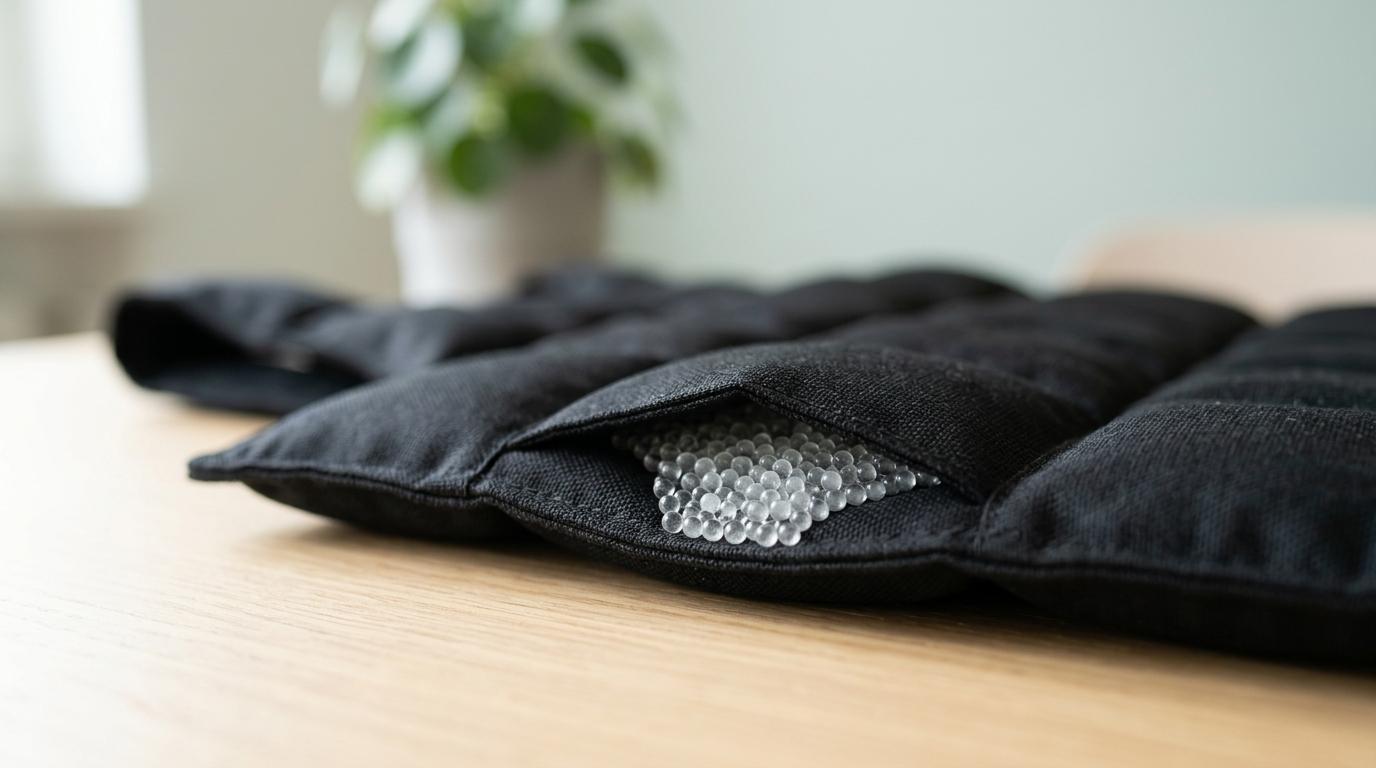
Glass filling typically consists of small, dense glass spheres or glass granules, which are encased in the chamber of the vest. This provides for even weight distribution and a relatively compact construction. The result is often a vest that feels smooth and uniform, even when the user is in motion.
This is especially important for people who respond clearly to small changes in pressure, texture, or sound.
Glass padding in the weight vest provides better hygiene in everyday use
Hygiene It makes a big difference when assistive devices are used close to the body. This applies both in families, daycare centers, schools, residential care facilities, and nursing homes. A weighted vest often comes into contact with clothing, skin, sweat, and everyday environments where cleaning must be able to be done quickly and safely.
Glass padding has the advantage that the material itself does not absorb moisture in the same way as organic padding types can. This makes it easier to keep the product fresh when the vest is constructed with cleaning-friendly surfaces and robust seams. In practice, this means less risk of the vest feeling heavier, damp, or less comfortable after use.
When manufacturers work with sensory-motor aids for hygienic environments, this becomes a crucial point. Not only for reasons of cleanliness, but also because frequent wiping and cleaning must not compromise functionality and safety. security.
After a while of use, it is often these characteristics that people notice the most:
- Less moisture impact: Glass filler does not retain moisture as more absorbent materials can do.
- Easier cleaning: The West can more easily adhere to regular routines for cleaning and maintenance
- More stable experience: The filling does not change its character because it is affected by moisture in the same way.
- Suitable for multiple environments: Practical in homes, institutions and care facilities
Glass padding provides high durability in heavy-duty vests
Durability isn’t just about how long a vest can be used. It’s also about how long it retains the same experience of weight, balance, and comfort.
Glass padding is dense and durable. This means that the desired weight can be achieved without making the vest unnecessarily bulky or rough. At the same time, the padding has a uniform structure, which makes it easier to distribute the weight precisely in the vest’s chambers. When the padding is stable, the risk of uneven load distribution and unnecessary wear on certain areas is reduced.
In environments with many usage situations in a day, this is a clear advantage. The vest is taken on and off, moved, stored, cleaned, and used by people with different movement patterns. It is important that the design can keep up with this, without the product quickly losing shape or function.
Below is a simple comparison of the typical properties of different types of fillers:
| Attribute | Glass filler | Plastic granules | Organic filling |
|---|---|---|---|
| Density | High | Medium | Low to medium |
| Weight in less space | Yes | Partly | Rarely |
| Moisture absorption | Low | Low | Often higher |
| Stable weight distribution | Good | Varies | Varies |
| Suitable for frequent cleaning | Good, depends on the construction | Good, depends on the construction | Often less suitable |
| Long lifespan with daily use | Often high | Medium to high | Variates more |
The table shows general trends. The specific quality still depends on the design, stitching, surface materials and closures of the West itself.
Sensory benefits of glass padding in a weight vest
The sensory experience is often the reason why a weight vest is chosen in the first place. Many users seek peace, control, and a better sense of their body. In this case, glass padding can make a noticeable difference because the weight feels more evenly distributed and less "rough" in the body.
When the padding consists of small glass particles, the vest can typically sit closer and more evenly to the body. This provides a more overall pressure and fewer areas where the weight accumulates in hard spots. For some users, this feels more soothing. For others, it simply makes the vest easier to accept over time.
Another advantage is that glass padding often produces less noise and less movement inside the vest than coarser padding might do. This can be important for people who are sensitive to sound or respond to small unpredictable changes. When the vest is perceived as quieter and more predictable, it can be easier to use in school, therapy, rest, or activity.
Typical sensory benefits may include:
- even weight
- closer body contact
- more quiet movement in the filling
- less noise
- more discreet fit
- clearer body delineation
Glass padding and weight distribution make the weight vest more comfortable
Comfort arises when several things work together. The filling type, chamber division, fabric, closures and size must all fit together. Glass filling helps especially with the part that deals with precise weight distribution.
A vest with well-distributed glass padding will often feel less bulky than a vest of the same weight made with less dense materials. This is because more weight can be placed in less space. For the user, this can mean better freedom of movement around the shoulders and upper body and a vest that doesn’t seem as dominant in everyday life.
This can be of great importance for children who need to be able to play and participate in activities, and for adults or older people who want support without feeling overwhelmed by the size of the product itself.
Who could benefit from a weighted vest with glass filling?
Weight vests are used by many different people. Some have autism, ADHD, anxiety or general sensory challenges. Others have dementia, Anxiety, a need for bodily restriction or difficulty in finding peace in certain situations.
Glass filling is particularly relevant when one seeks a vest that combines sensory effect with practical benefits in everyday use. This is often the case in situations where the product must be easy to clean, withstand repeated use, and at the same time feel comfortable and predictable.
However, it is important that use is always assessed individually. Weight, duration of use and situation must be adapted to the individual, preferably in conjunction with professionals when the need is complex.
Here are some typical usage situations where glass filling often makes sense:
- In schools and day care centers: when the West needs to be discreet, stable and easy to handle
- At home: when a calm routine is needed around breaks, homework or transitional situations
- In institutions: when several employees need to be able to maintain and use the product uniformly
- In elderly care: when comfort, cleanliness and robustness are important
What to look for when choosing a glass filling in a weight vest
It’s not enough that the product description says “glass padding”. The quality depends on how the padding is constructed and how the rest of the vest is made. A good weight vest should be safe to use and feel comfortable even after prolonged use.
First, look at the weight distribution. The padding should be placed in chambers that keep the weight stable. This provides a more uniform experience and reduces the risk of the vest sagging. Next, look at the materials and cleaning options. If the vest is to be used in environments with high hygiene requirements, surfaces, seams, and closures are almost as important as the padding itself.
It is also worth considering whether the product has been developed with input from professionals such as physiotherapists and occupational therapists. This often results in better thought-out solutions regarding fit, load, and daily use.
A good choice is often characterized by:
- Stable chamber division: The weight stays where it should be
- Cleaning-friendly materials: Practical for frequent use and maintenance
- Tested materials: Relevant when the vest is worn close to the body
- Robust stitching and closure: Important for safety and long lifespan
- Clear guidance: Makes it easier to use the vest correctly
Safe use of a weighted vest with glass filling in everyday life
A weighted vest works best when incorporated into a clear and calm routine. This can be in short breaks, during sedentary activities, in transitional situations, or as part of a planned sensory intervention. The user should preferably experience a sense of security and predictability, not of coercion or strain.
This applies especially to children and the elderly, where needs can change from day to day. Some benefit from the vest for a few minutes at a time. Others use it in certain parts of the day. The right solution depends on the person’s body size, tolerance, sensory profile, and daily routine.
When glass padding is combined with thoughtful design, the weight vest can become a more reliable and comfortable tool. Not because the padding material solves everything on its own, but because it supports three things that matter a lot in practice: hygiene, durability, and a calm sensory experience.
For many users, it is precisely the sum of the details that makes the difference between a vest that stays in the closet and a vest that is actually used.
[custom_faq_accordion]
Share this article
Other Articles

October 16, 2026

October 16, 2026
October 16, 2026
October 16, 2026

October 16, 2026