




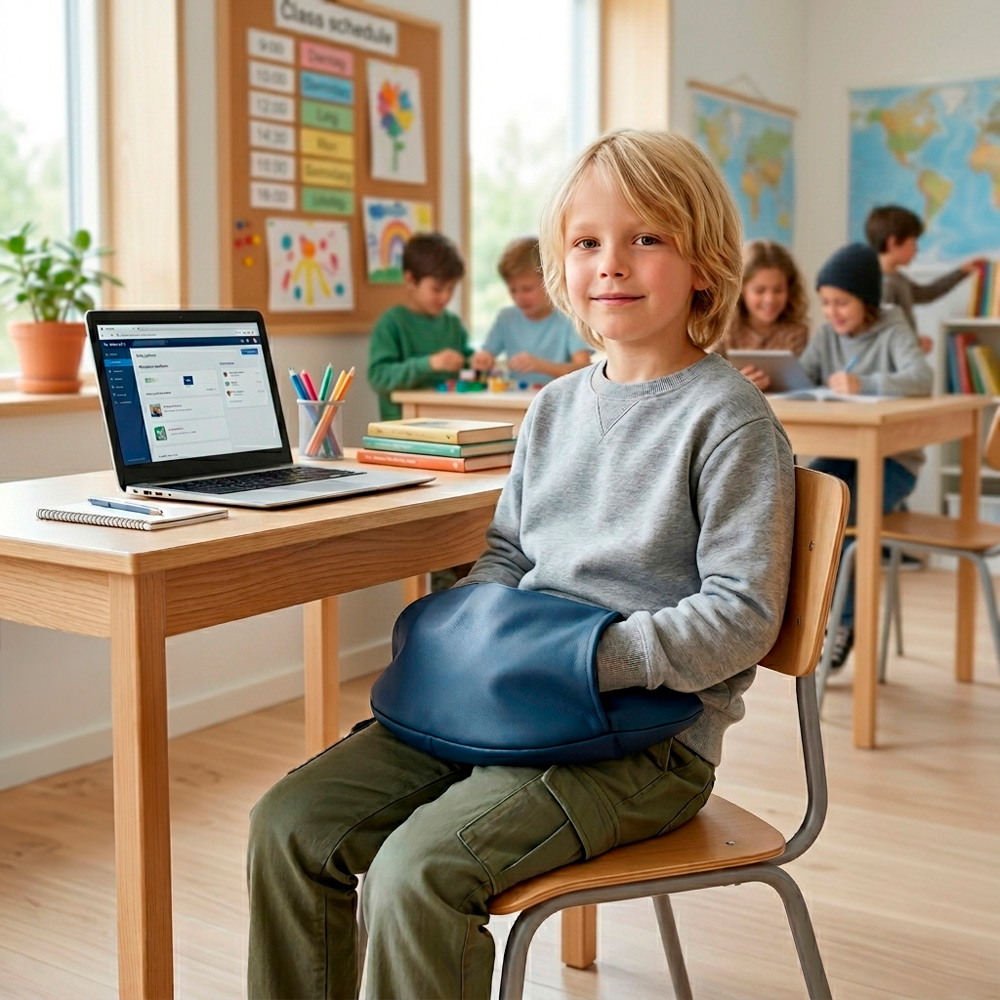
Sensory kits for the classroom: Must-haves for calm and focus
A good sensory toolkit in teaching is not about filling a box with exciting things. It’s about choosing tools that make sense in a busy school day and that can be used calmly, safely, and purposefully. A well-thought-out and creative sensory toolkit can serve as key tools in children’s learning and development – especially for students with ADHD, autism, and other specific sensory challenges.
In many classrooms, there are students who concentrate better when their bodies receive appropriate sensory input. Some need weight and pressure to find peace, and this can strengthen children’s fine motor skills and their sense of their own body. Others need to shield themselves from sound, get something discreet between their fingers, or sit more stably. When the tools are chosen thoughtfully and supplemented with visual support systems and pictograms, they can support both focus, participation, and well-being without taking attention away from the teaching – whether they are used in the classroom or in a specially dedicated sensory room.
Why sensory tools in teaching can strengthen calmness and focus
Children learn not only with their heads – learning also takes place with their bodies. If the nervous system is overworked, or if the body seeks more input, it becomes more difficult to listen, wait for turn, finish reading a text, or sit at the table. A creative sensory kit with varied tools can help support not only concentration, but also general sensory development, so that students can experience both comfort and mastery.
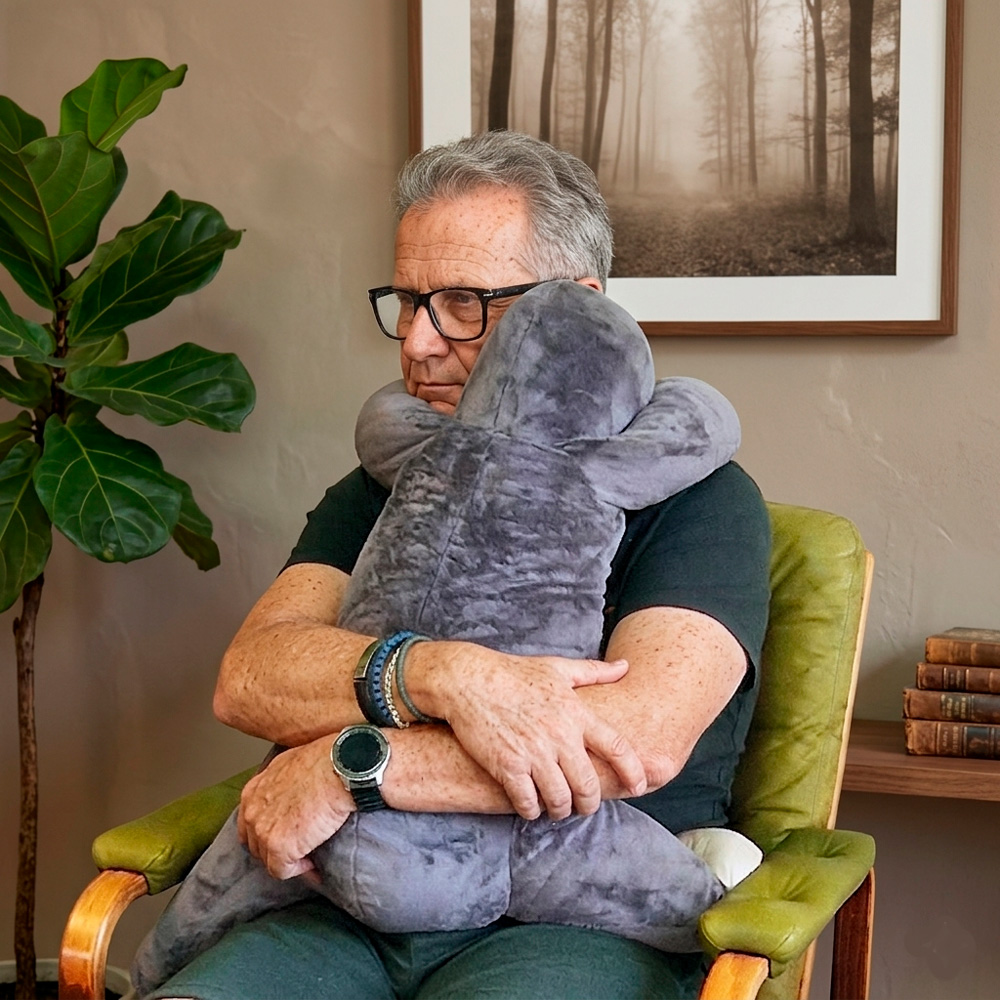
Here, a sensory kit can make a real difference. It can give the student a way to regulate themselves before the anxiety grows too big. A small tactile tool in the hand may be enough for some, while others benefit from deeper sensory input – for example, by using weighted teddy bears that provide calm and support fine motor skills through tactile impulses. Occupational therapists, educational professionals, and assistive device experts often point to the same pattern: When sensory input matches the student’s needs, it becomes easier to reach a calmer and more useful level of activation. This is exactly where a well-chosen kit can support. Not as a quick solution, but as part of a well-thought-out practice in the classroom.
Sensory areas a sensory kit for school should cover
A well-functioning kit rarely contains only one type of tool. Students react differently, and therefore it is beneficial to think broadly. Some seek something to touch, and others need tools that stimulate their fine motor skills. Some need to be shielded from noise using noise-reducing aids and visual support systems, and some prefer weight and pressure. In addition, the use of pictograms can help create overview and predictability in the use of the tools, so both students and teachers experience a sense of calm and structure in the teaching process.
When assembling a kit, it is often a good idea to cover multiple sensory areas so that the teacher doesn't have one solution for everyone.
- tactile tools
- noise-reducing solutions
- visual calm elements and pictograms
- proprioceptive pressure and body sense
- stationary movement with low interference
That doesn't mean that the class should have everything. It means that the tools you choose should be able to meet different needs in a simple and manageable way.
Must-haves in a sensory kit for classroom use
When the goal is more calm in the classroom, discreet and robust tools often work best. They must be able to withstand daily use, be easy to clean, and preferably be able to be used without attracting unnecessary attention from the rest of the class. In environments with students who have conditions such as ADHD or autism, it is especially important that the tools support both self-regulation and fine motor skills.
Below is a simple overview of the types of tools that often provide the most value in a classroom.
| Need in the teaching | Tool type | What it can support | Typical use |
|---|---|---|---|
| Restless hands | Silent fidgets, texture balls, squeezing tools | Tactile input, rhythm, hand control | At the desk and in listening |
| Sound sensitivity | Earplugs or noise-canceling headphones | Protection from disturbing noise | Independent work, experiments, group work |
| Need for security and deep pressure | Shoulder pillow, weighted ball, small weighted blanket | Body awareness, calmness, relaxation | Reading time, gathering, breaks |
| Motoric restlessness at the chair | Sensomotoric sitting cushion | Stability, movement on a small scale | Writing work, teaching at the table |
| Brief break with the wrapping of the body | Rest bag or quiet pause aid | Deep pressure stimulation, body restriction | Pause area or quiet zone |
One of the most important choices is to opt for tools that promote calm rather than distraction. There is a big difference between products here. Small, quiet fidgets can be helpful, while fidget spinners in many cases distract from the task and are therefore rarely the best choice in teaching.
Weighted products also take up more space in a sensory kit because they often make a noticeable difference for students who need deep pressure. A shoulder cushion can support concentration during quiet work, and a weighted teddy bear can help with both stress relief and promoting children’s development of body awareness. Furthermore, a sitting cushion can provide stability and controlled movement without the student having to get up all the time.
Choosing sensory tools according to the student's needs
The same tool does not work the same for everyone. This is perhaps the most important principle to keep in mind. One student may become calmer from the weight on their shoulders, while another prefers to use their hands on something soft and simple to stimulate fine motor skills. A third student especially needs to reduce noise, and here pictogramming and visual support systems can help create calm and predictability in the classroom’s daily routine.
Therefore, a kit should be built not only based on age, but also on behavior in specific situations. When does the agitation occur? Is it during transitions, during sedentary work, in groups, or at high noise levels? When looking at patterns rather than isolated incidents, it becomes easier to choose the right one.
- Sensitive learners: choose calm, gentle tools with low intensity, such as noise reduction, soft tactility or mild weight.
- Sense-seeking student: choose more clearly visible physical input, such as a seat cushion, shoulder cushion or weight bar
- Student with auditory sensitivity: prioritize hearing protection, a quiet classroom environment, and avoid visual distractions through the use of visual support systems and pictograms
- Student with severe motor dysfunction: choose tools that provide movement or pressure without the student having to leave the task
It is also wise to start small. One simple tool at a time makes it easier to see what the student is actually benefiting from. If the entire toolbox is opened at once, it becomes difficult to assess the impact of both the aids and the visual support systems that contribute to calmness and structure.
Hygiene, safety and durability in a sensory kit for the classroom
School use places different requirements than home use. The tools must be able to withstand many hands, frequent cleaning, and changing users. This is especially true in early childhood education, special education programs, and shared learning environments, where the equipment is used every day and should support both children’s development and learning.
Materials should therefore be easy to clean and robust. Removable surfaces, washable covers, and solutions without loose parts are often the most practical. Some weight products are made of materials that withstand wiping and daily maintenance, which is a great advantage in institutions and schools. When both the visual and tactile elements are involved, one can, for example, equip a small area with a sensory room where students can retreat and have a quiet break.
- removable materials
- washable textiles
- low-volume use
- compact size
- Clear age and weight recommendations
With weighted equipment, it is important to choose size and load with care. If you are unsure, you should always discuss the equipment with relevant professionals regarding the child. The equipment should feel safe and supportive, not heavy in an uncomfortable way.
Concrete products that often make sense in school environments
In practice, many schools choose to build a kit from individual products rather than buying a finished solution. This provides better opportunities to customize the content to the student group and support children’s development and learning through targeted tools. Here, it makes sense to look at tools that have already been developed for everyday use and for sensory motor needs.
Among products with weight, weighted teddy bears are often a good place to start. A model like Sensitive Eric or The donkey Rita Can be used on the shoulder, over the abdomen, or close to the body in reading and break situations. They provide both tactile softness and deeper pressure and serve as key aids for students who need additional sensory input. For students who need more clear pressure over the shoulders, the shoulder pads Instead of Zita, Camo or Liz, more targeted solutions would be more appropriate.
For table work is one sensomotoric sitting cushion like Eva Often relevant because it can give the body something to work with without creating unrest in the rest of the class. In a quiet break area, a weight blanket like Little Sally or one sleeping bag like Zleep They are obvious tools for short regulatory breaks. This type of product is typically not used in the middle of the class’s common activity, but in fixed frameworks where the student can withdraw briefly and return more regulated.
When schools choose products, there is good reason to look for solutions that have been developed in collaboration with professionals and are manufactured for hygienic use. This provides added reassurance in everyday life, especially when the tools become an integral part of teaching – whether they are used in a traditional classroom or in a specially designed sensory room.
How to introduce sensory tools without disrupting the teaching process
Even the best tools only work well if their use is clearly understood. Students need to know when the equipment is used, where it is stored, and what the purpose is. Otherwise, a good tool can quickly become just another thing competing for attention. By integrating pictograms and other visual support systems into teaching, it is possible to clarify which aids should be used in different situations – and thus support children’s understanding and confidence.
It often works best with simple rules. A fidget tool is used with one hand at table height. Hearing protection is used when working individually. Weight products are used during agreed periods, and the sensory room is a place where students can retreat and have a short break with deep pressure stimulation. The more predictable the use is, the easier it becomes for both the student and the teacher.
It can also be beneficial to present the tools as learning support rather than as rewards. When the student senses that the goal is to help the body relax and the brain focus, the use becomes more natural. And when the teacher also follows up on what works, the sensory kit becomes an educational tool rather than a loose collection of things.
In some classes, a small basic selection is enough. In others, more options are needed. What matters is not the quantity, but that each tool has a clear function and suits the children who are supposed to use it – while also supporting their individual development and creative expression. This is where a thoughtfully designed sensory kit can become a silent but very valuable support in the school day.
[custom_faq_accordion]
Share this article
Other Articles

October 16, 2026
October 16, 2026
October 16, 2026
October 16, 2026
October 16, 2026