



Shoulder pillow vs thigh pillow weight: which is best?
When the body is in alarm mode, even small demands can feel overwhelming, and the need for relief becomes clearer. A child who needs to sit quietly during a gathering. A young person who needs to complete their homework. An adult who is overwhelmed by noise, restlessness, or many impressions at once. In these situations, many look for a means of support that can provide peace without requiring lengthy explanations.
Weighted products with deep pressure are precisely the type of help that often works “in the body” before it works “in the head”, creating a neutral calming effect. The question is simply: Should the pressure be over the shoulders, or should it be on the thighs?
Deep pressure and gravity: that's why two pillows feel so different
Both shoulder pads and thigh pads is based on the same fundamental principle: a steady, comfortable pressure can support the nervous system in calming down. Many describe it as being “grounded” or as a quiet, physical reminder of the body.
The positioning significantly changes the experience. The upper body is closely linked to breathing, tension in the chest and shoulders, as well as the way many “hold on to themselves” when under pressure. The hips and thighs often correlate with the ability to sit, maintain a stable body position, and hold on to a task.
That is also why two people can have the same challenge, but react best to each type of weight.
Shoulder pillow: when the upper body seeks security and freedom
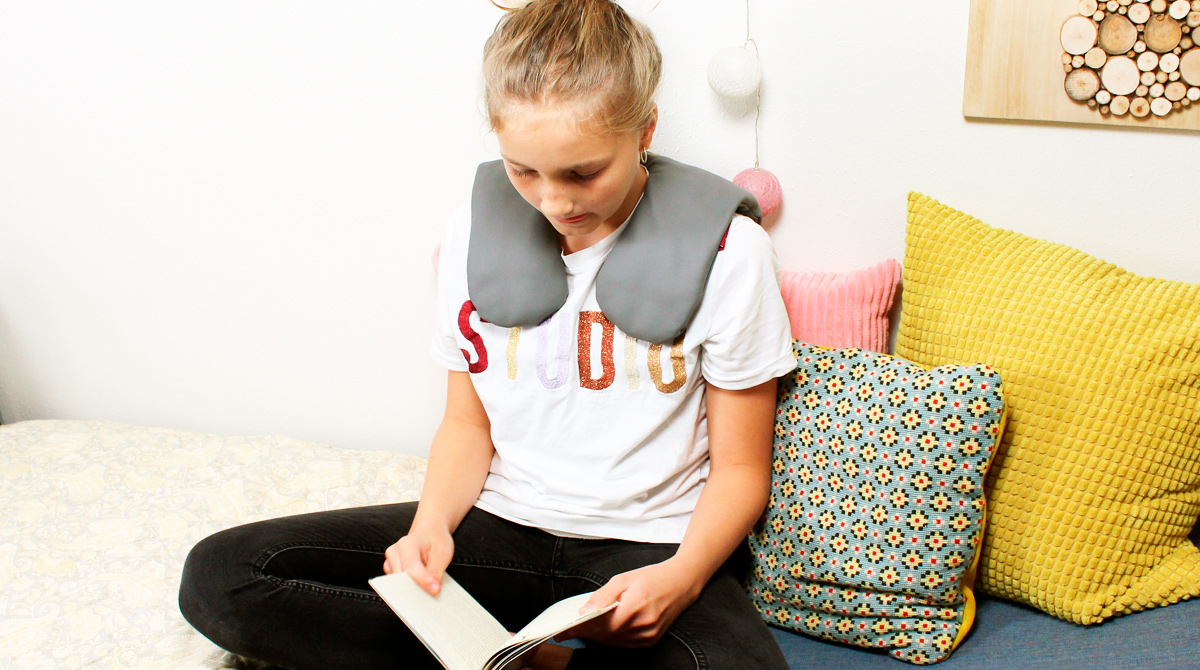
One shoulder cushion Typically, it sits like a soft collar across the shoulders and upper back, sometimes with gentle pressure towards the chest. It can provide a comforting feeling, reminiscent of a hug, without anyone needing to touch the user. For many with sensory challenges, this can be an important detail.
The shoulder cushion is often chosen when there is a need for comfort, but one can still move around, which is one of the advantages of the shoulder cushion. It can be used in the sofa, at a standing desk, in the hallway at school, in a quiet corner at the institution, or during a workday when one changes positions.
It is often good in situations with:
- transition from one activity to another
- distress in the body that sits “up in the shoulders”
- the need for a quick ro signal without completely interrupting it
- users who do not feel comfortable being “tied” to a chair
An important practical point is ergonomics. If a shoulder pillow is too heavy, it can cause discomfort in the neck or upper back. The right model should feel supportive, not pulling.
Thigh cushion: when the focus starts to shift to sitting
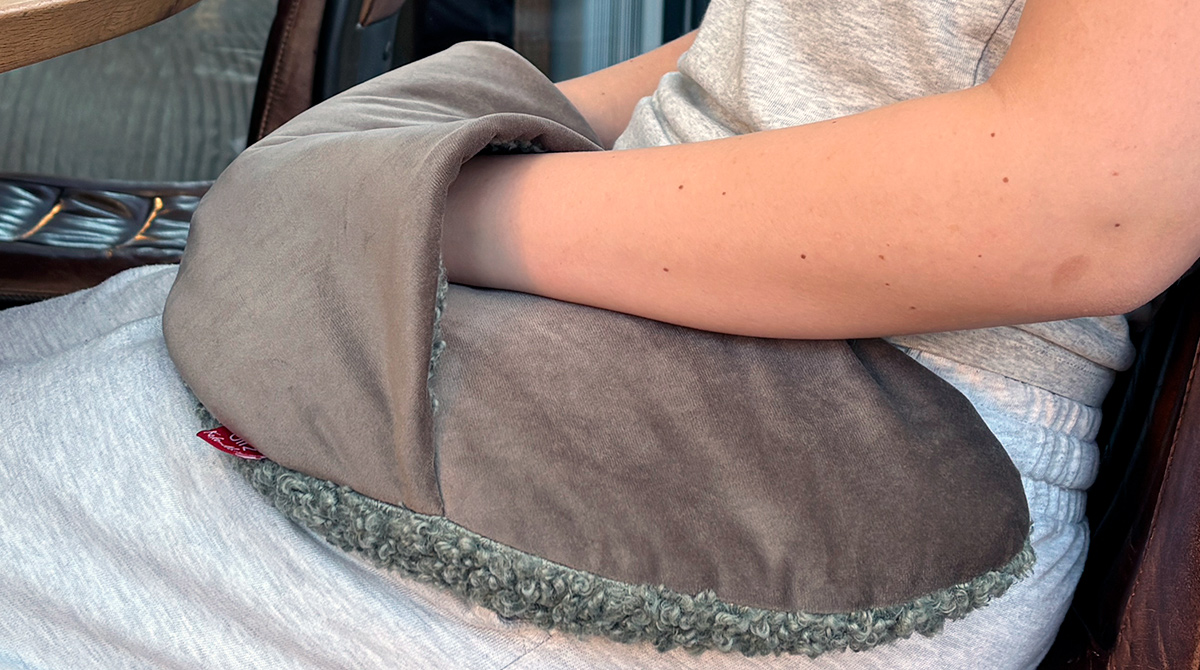
One thigh cushion, The lap pad, also known as a lap pad, is placed on the lap and provides a stable pressure over the thigh and hip area. It is often perceived as more discreet in use. It does not “fill” the field of vision and does not interfere with the arms.
The hip cushion is typically chosen when the challenge arises in seated activities: teaching, meetings, meals, reading, screen tasks or transportation. Here, the weight can support the body in remaining in a calm position, so mental energy doesn’t constantly have to be spent keeping the body together.
It is often a good match for:
- children who get up many times during an assignment
- Young people who lose their grip due to leg discomfort
- Adults who get more peace of mind with a clear “anchor” in their body
- elderly people with unease or restlessness, where a calm pressure on the scalp seems soothing
Some also experience that the thigh cushion reduces the need to tilt, drum, or squeeze hard with the hands. It doesn’t take away all the needs, but can move some of the discomfort down into a more stable area of the body.
A quick compass for choosing: what does your situation indicate?
When choosing between a shoulder pillow and a hip pillow, it makes sense to start with the situation, not the diagnosis. Here is a practical guide that often hits the mark on the first try:
- Primary activity:
- shoulder cushion during shifts, movement and breaks
- Thigh cushion for sedentary tasks and concentration
- Where is the unrest?: (shoulder cushion vs thigh cushion weight)
- “up in the body” (shoulders, chest, tension) points towards the shoulder cushion
- “down in the body” (legs, hips, travel-like behavior) points to the thigh cushion
- Need for discretion:
- Waist cushions can be more comfortable in class and meeting situations
- shoulder pads can feel more pronounced and enveloping
- Tolerances:
- Sensitive neck and tension can make the thigh cushion more comfortable
- Uncertainty when pressing on the legs can make the shoulder cushion more comfortable
Comparison in practice
| Criterion | Shoulder cushion (weight) | Thigh cushion (weight) |
|---|---|---|
| Experience | Embracing, “hugging” over the entire body | “Dyne” on the ground, grounding |
| Best for | Transitions, pauses, calmness during movement | Focus on sedentary activities |
| Freedom of movement | Good, the arms are typically free. | Requires that you sit down |
| Typical challenge | Can strain the neck with too much weight | May feel warm or heavy for a long time |
| Internship in an institution | Good in the corner and during guided breaks | Good at teaching, assembly, meal situations |
How to choose the weight and size without hitting it exactly right
There are some general guidelines, but the most important rule is comfort and the ability to remove the product yourself. Many people work from about 5 to 10 percent of their body weight, often with lower weights for children. Still, two people with the same weight can prefer very different pressures.
A simple way to start is to think in terms of “minimum effective pressure” to ensure quality. Start with a lighter model first and gradually increase if the effect is too weak.
If you want to do it in a concrete way, you can use the following checkpoints:
- Starting weight: Choose a weight that feels clear but not heavy after 1 minute.
- Time: Try 10 to 15 minutes the first time, under supervision, and then observe the results afterwards.
- Signal: Look for signs of calmness (deepening of breathing, less tension, better eye contact, fewer interruptions).
- Stop: stop when there is heat, irritation, increased restlessness, pain, or a feeling of being “locked in”.
In many families and professional settings, it provides peace of mind to keep a small logbook for a week: when the pillow was used, for how long, and what changed.
Use in everyday life: small routines that make it easier to achieve results
Weighting works best when it becomes a predictable part of the day to promote well-being, and not just a tool that is brought out when it’s burning hot. For children, it can also increase their acceptance that the pillow has its “place” and its regular usage situation.
It might look like this:
- Morning start
- Textbook reading
- Gathering at the kindergarten
- Breaks in school
- Transport by car or bus
- Evening snack before bed time
Some use the shoulder cushion as a brief “reset” between activities, which can be beneficial for people with ADHD who need to switch focus. Others use the thigh cushion as a permanent part of their desk work, so their body doesn’t have to constantly fight to stay in its seat.
Safety and consideration must always be present
Heavy products They should feel safe. This involves both weight, health, and the context of use. Be extra careful in cases of circulatory problems, respiratory challenges, pronounced pain problems, skin disorders, or if the user has difficulty communicating discomfort.
A simple safety routine could be:
- Choose a weight that can be lifted by the user themselves, without struggle.
- Ensure free breathing and free movement of the arms and upper body.
- Use short intervals at the beginning and pay attention to your body's signals.
- Avoid unsupervised use in young children, and do not use the pillow as a “sleeping solution” without professional evaluation.
- Check the seams and covers regularly, especially when used daily in an institutional setting.
If the goal is to get to sleep, many people prefer a weighted product that is designed specifically for that situation and follows local guidelines and professional recommendations.
Materials, hygiene and durability: what matters on day 30
When a heavy-duty product becomes a regular part of everyday life, the practical requirements quickly come to the fore. It must be able to withstand being used many times by many hands, and it must be able to be kept clean without hassle.
Look for:
- robust textiles that do not lose their shape
- fill that remains in chambers, so the weight is evenly distributed
- cover that can be removed and washed
- Materials tested for unwanted chemicals, especially for children and vulnerable users
Sensomotoric assistive devices produced in Denmark, such as those Oliz/Koko-Nora works with, are often developed with a focus on everyday use and hygiene, And in collaboration with physiotherapists and occupational therapists. This makes a difference in environments such as special schools, kindergartens and care centers, where the workload is high and cleaning cannot be a compromise.
Tips for choosing the right product
If you are unsure about a shoulder pillow or thigh pillow, choose one based on a specific goal at a time. Not “more peace of mind” in the broad sense, but something that can be seen in everyday life: fewer interruptions at the table, less time to calm down after a break, or a more stable posture while reading.
Start with the pillow that best suits the situation and agree on a short trial period. Two weeks is often enough to get a sense of the direction if the use is fairly consistent from day to day.
Some end up with both types, because they cover each part of the day. The shoulder cushion for transitions and breaks. The thigh cushion for tasks where the body needs to stay still.
It’s not a failure to change. That’s how you find the solution that suits a person, not just a category.
[custom_faq_accordion]
Share this article
Other Articles

October 16, 2026

October 16, 2026
October 16, 2026
October 16, 2026

October 16, 2026