



Advantages of weight-based tactile input in special classes
Anxiety in a special class is rarely “just bad behavior”. It is often a signal that the body is overworked and that the child is lacking a place to process sensory impressions, tension, or anxiety. Once push, scream, or flight from the table arrives, it is difficult to achieve learning, relationships, and community.
Heavy products And tactile input can provide a concrete, friendly response to that challenge: “Your body is welcome to settle down while we’re still together.” Below you’ll find a case guide showing how a special class can transition from frequent bursts of agitation to more stable focus by working systematically with deep pressure and touch.
When unrest becomes part of the rhythm of the class
In many special classes where autism and ADHD are often a factor, agitation occurs at the same times: at shifts, demands, waiting times, and social situations. Transitions can feel like shifting gears without a clutch. A student can seem “suddenly” explosive, while staff often can see a pattern when looking at the day as a whole.
It helps to think in two tracks at the same time: pedagogy and the nervous system, especially in the case of children with ADHD or autism. The pedagogy provides structure, predictability, and clear frameworks. The nervous system track is about arousal, bodily sensation, and sensory regulation. Weight and tactile input belong in that track, but it works best when they are integrated into everyday life and not a last-resort solution to be grabbed for when everything is burning down.
A good rule of thumb in the class is that the earlier you provide support for the body, the less “noise” there will be later on.
What weight and tactile input can do in practice
Weight is deep pressure, a uniform, enveloping pressure that can be experienced as comfort and “cohesion” in the body. Many children with autism, ADHD, anxiety, or general sensory challenges respond with lower stress and better self-regulation when the body receives that input. Research and clinical experience indicate that deep pressure can have a calming effect on parts of the nervous system, among other things described by Temple Grandin’s work on pressure as anxiety reduction.
The sense of touch and sensation are activated through tactile input, which is touch and small movements in hands, fingers or feet. It can be anything from a fidget, A ball or texture surface on an elastic band on the chair provides “legal movement”. When it works, it’s not because the child is distracted, but because the brain receives controlled, repetitive input so the rest of the body can stay on task for longer.
That is also why you often see the effect especially during stationary tasks, in waiting times and in situations with many stimuli.
An anonymized case: Three students, one class, many shifts
Imagine a smaller special class in elementary school. There is a high level of activity, several students have difficulty sitting at the table, and especially two times are challenging: the morning start and the time right after recess. The staff experiences that they spend a lot of energy on “getting everyone back” and that conflicts quickly spread.
They decide to try out a simple plan for four weeks: one weight choice for desk work, one tactile choice for waiting time, and a quiet corner for relaxation. At the same time, they are creating a common way to record small signs of overload so that intervention can be initiated before the outbreak occurs.
The important thing in the case is not that everyone reacts the same way. They don’t. The important thing is that the class gets a common, predictable framework for how to help the body get back on track.
After a short time, staff typically describe three changes: fewer interruptions during start-up, shorter time between breaks and work, and less need for adult supervision in the small waiting areas.
This is how to build a “ro-menu” without making it a reward
Weight and tactile input works best when it is available, neutral and dignified. It may be common, not something one is “given” if one has had difficult behavior. Many children quickly feel embarrassed if assistive devices become a visible sign.
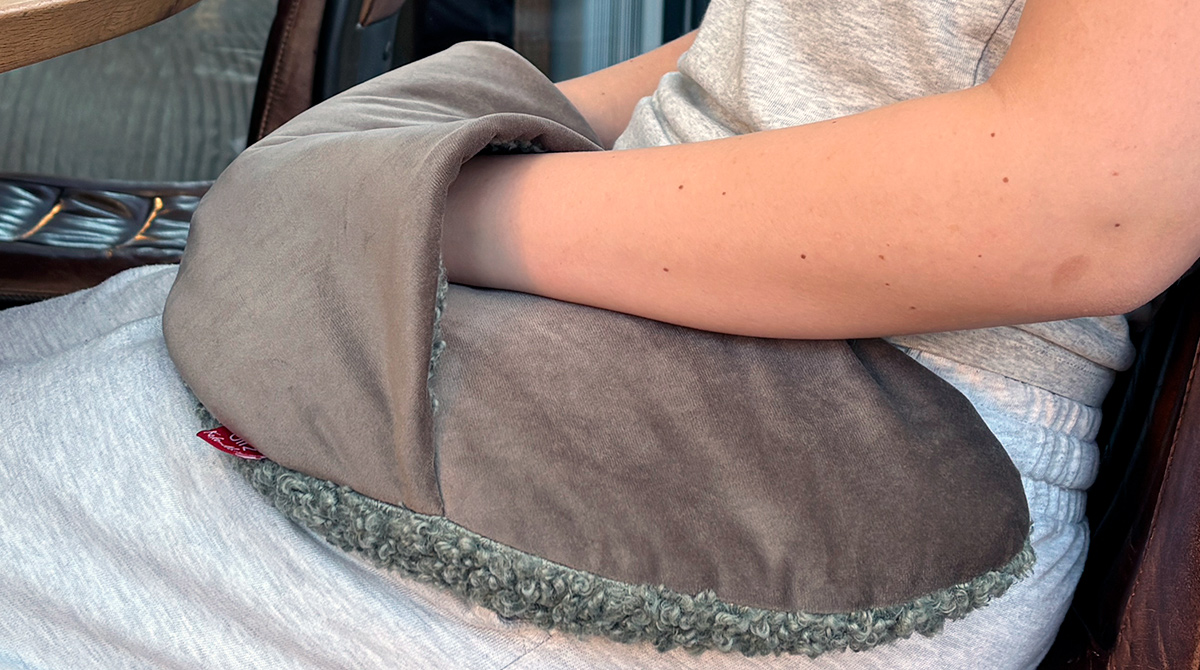
That is why it makes sense to work with a calm menu: a small selection of options that the child can choose from and that the staff can suggest without drama. It could be a weight blanket on the thighs by the table, one thigh cushion with tactile elements, a weight bag to hug in the break, or a fidget in the waiting time.
After a brief introduction, you can agree on when the tools can be used and how to take care of them. When everyone knows the rules, the level of conflict often decreases because the “battle for permission” becomes less intense.
It also helps to make the language physical and simple: “Do you need your body to have pressure, touch, or fingers involved?” instead of long explanations.
Typical aids and when they make sense
There are many variations within sensory technology, and it is not necessary to start with a large investment. In practice, it is often best to start with a few robust solutions that can withstand daily use and frequent cleaning. At Oliz/Koko-Nora, development takes place sensomotoric aids Especially for hygienic everyday life and in collaboration with physiotherapists and occupational therapists, so that design and load are adapted to realistic institutional use.
Here is an overview that many special education classes can use to choose the right assistive devices, which include weight and tactile input for the special class:
| Input | What it brings | Good time in the school day | Typical pitfalls |
|---|---|---|---|
| Weight blanket or weight blanket | Deep pressure over legs/body, “collecting” the body | Morning start, sedentary tasks, return home, rest break | Too heavy, too hot, or used as punishment |
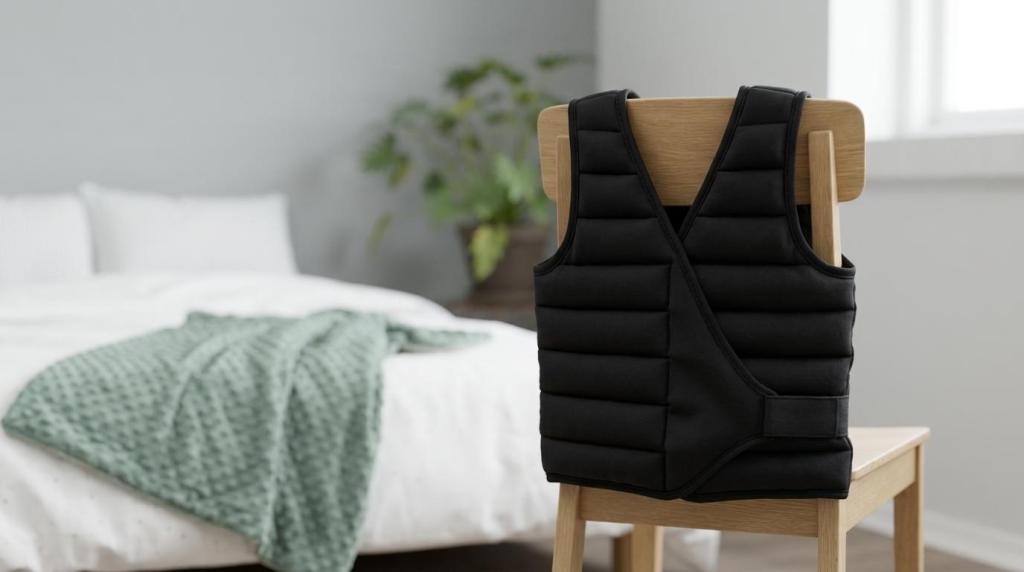
| Weight vest | Even pressure during activity or at the table | Transitions, walks on the street, shorter work blocks | Long periods of use without breaks, incorrect fit |
| Hip pillow/kneepod with tactile elements | Press on the leg + something to feel with your hands | Table work, assembly, waiting time | Is thrown or used as a toy if the boundaries are unclear |
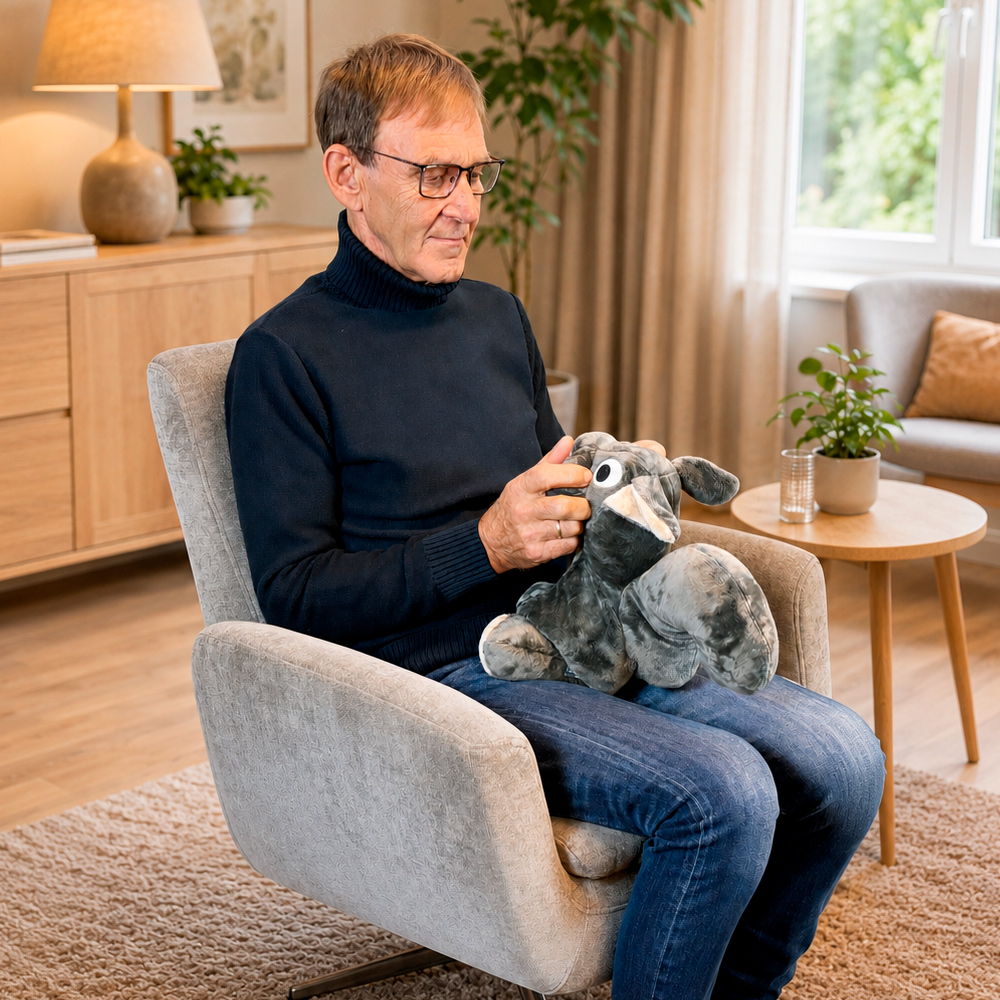
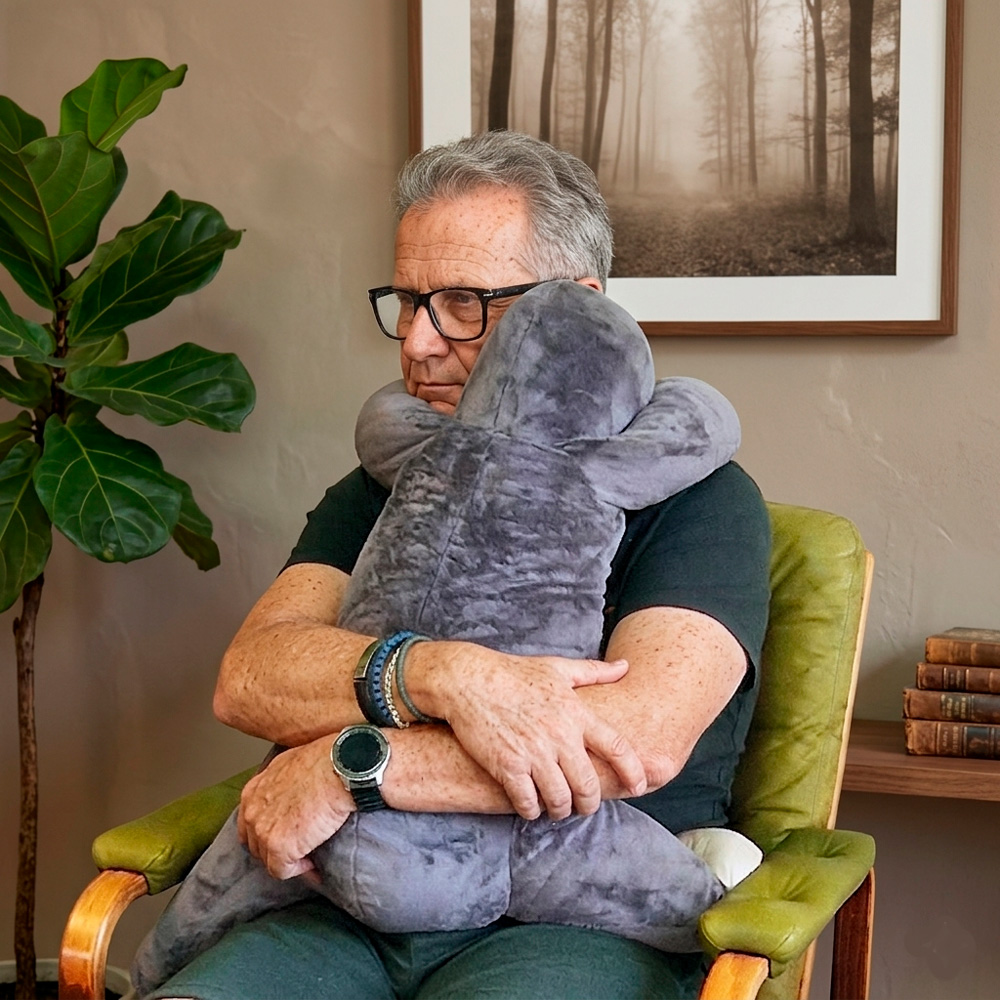
| Weight loss | Security, hugs, deep pressure in the embrace | Paces, reading corners, emotional shifts | Sharing without structure can create conflicts |
| Fidget, putty, stress ball | Tactile micro-movements that can increase persistence | Instructions, listening, driving, transportation | Too much noise or “show” can disturb others |
| Elastic band under the table (movement for feet) | “Legal unrest” without rising up | Sedentary periods | Can be removed if it is not securely mounted |
A practical advice is to think in two directions: what helps the student to stay in the community, and what helps the student to withdraw in a safe way without escalating the situation.
Introducing the class: a simple plan that can be used in everyday life
When a new initiative doesn’t work, it often means that it’s too complex. Aim for a plan that can work on a busy Tuesday with a substitute. In the case above, it made sense to create three fixed elements: the quiet menu, the quiet zone, and the common sign.
ADHD and autism can often play a significant role in the need for customized assistive devices for students in special classes. Children with ADHD may have difficulties with concentration and impulsivity, which requires strategies that can help them maintain focus and remain a part of the community. The use of assistive devices such as weighted blankets or fidgets can be particularly useful in reducing hyperactivity and providing a sense of safety and structure for these children.
A concrete way to get started with assistive devices might look like this:
- Choose 2 to 4 tools that are easy to find and easy to clean.
- Choose one “standard” solution for desk work, and one for breaks.
- Introduce the tools as something that helps the body, not as something that one “deserves”.
- Create short rules for use, time, and storage.
- Give the opportunity to say no thanks and offer an alternative.
- Set up a quiet area that doesn’t feel like isolation.
- Decide who will guide when a student is on the way up in arousal.
- Use the same phrase every time, so the child recognizes the help.
- Write down observations in a few words: time, situation, tool, effect.
- Adjust after 2 weeks and again after 4 weeks, without changing everything at once.
It is completely normal for the effect to be uneven at first, as body awareness can take time to develop. Some children need to “learn” the feeling of weightlessness, and others become more restless if input arrives too late when the body is already under too much pressure.
Small signs that tell you to act sooner
When working with sensory regulation, timing is almost everything, and it can be effective to include the tactile sense in the planning. Many teams see great benefit in agreeing on early cues that trigger an offer of weight or tactile input before the behavior disrupts the learning situation.
The signs may be individual, but here are typical examples that recur in special classes:
- Restless breathing
- More scanning with the eye
- Quick switching between activities
- Increased sound level in the voice
- Pencil on clothes, pencil on the edge of the table
- “I don’t feel like it” comes very quickly
When the child experiences that adults respond to the early signals, the need for the big signals often decreases.
Product selection: match sensory profile, age and situation
It can be tempting to buy one solution for the entire class. In some places it makes sense, but often the students have very different sensory needs. One student can relax with a weighted blanket, which positively affects the nervous system, while another gets too hot and prefers a thigh cushion only on their legs. A third has the most benefit from something for their hands to stimulate the tactile sense, because their body is already tired, but their brain is running fast.
When implementing strategies in special classes, it is important to take into account the individual needs of each student. By adapting solutions to the individual students, one can achieve a more effective and positive impact on the overall learning environment. The strategies should be flexible enough to accommodate different sensory needs while ensuring that students feel seen and understood. This can create a safe atmosphere where everyone feels included while also promoting the development of the students.
When choosing, the following guidelines can make it easier:
- Usage situationTable, pause, transition, transport.
- Sans typeDeep pressure, tactility, the sense of touch, movement, combination.
- Practice and hygieneWashable cover, durability, easy storage.
- The child's acceptanceExpressions, colors, “may I have that too?” mean a lot.
- Safty: Proper pressure, breaks, supervision during rest.
In environments with daily cleaning and many hands on the same equipment, material selection and durability are not just details; they are a prerequisite for the aid actually being used.
Safety, consent and good frameworks
Weight-bearing products should always be used with caution. They must never hinder free breathing, free movement, or the ability to say no. A student must be able to get out of a blanket or push a pillow away. In case of doubt, or if the child has medical conditions that affect breathing, muscle tone, or circulation, professional evaluation should be obtained through appropriate healthcare professionals.
It helps to talk about consent in a simple way: “May I put it on your legs?” and respect a no. This often makes cooperation better in the long run, because the child feels that the body belongs to them.
And then there are the everyday frameworks that make it work:
- Fixed locationTools have a clear “home base” and a simple lending policy.
- TimeframeShort use with the possibility of repetition may be better than long periods of time.
- Role distributionWho guides, who observes, who documents with few words.
When body awareness and calmness become common skills in the classroom, the energy shifts. The teacher gets more teaching time, the educator gets more relational work, and the child gets more moments when it succeeds in being in what was otherwise too difficult.
[custom_faq_accordion]
Share this article
Other Articles

October 16, 2026
October 16, 2026
October 16, 2026
October 16, 2026
October 16, 2026